Showing posts with label Business Website SEO. Show all posts

Friday, April 13, 2018

Get Better On-Page SEO Impact on Your Business Websites

With so many businesses being launched everyday, how can you ensure that yours stands out? If your business has a good, first page ranking in search engine results, what can you do to stay on top?
  
Studies show that on desktops, the top-ranking page in Google search results has a conversion rate of almost 35%. And on mobile devices, its conversion rate is almost 32%. This shows how important it is to improve your search engine ranking and boost your site’s visibility.

SEO helps you optimize your website so that more users are able to find you on the internet. 61% of marketers say that SEO is a top priority when it comes to inbound marketing. This means that the competition is getting tougher. You need to build your brand’s presence online by taking steps to improve search engine rankings. 

Optimization of keywords, meta tags, title tags, and URLs are some of the common ways to improve a website’s SEO. But with changes and updates in how search engines rank a website, you need more than that. That is where on-page and off-page SEO come in. And this post is going to focus on on-page SEO.

On-page SEO involves optimizing a web page through internal organization, while off-page SEO refers to external configurations. 

Here are some of the best ways you can improve your on-page SEO:

1. Maintaining Website Speed

47% of customers believe that it shouldn’t take longer than 2 seconds for a web page to load. And even a second of delay can reduce your pageviews by 11%, and your conversions by 7%. A fast loading website is the key to an engaged audience. On the other hand, a slow-loading page makes people impatient, which leads to a higher bounce rate. 

For Google, a website that loads faster gets a higher ranking in search engines. Google’s PageSpeed Insights helps you determine the total time taken for your website to load. Once you know what’s slowing you down, you can take the necessary steps to improve your website speed.

2. Using AMP

Mobiles account for over 50% of website traffic, and this number is only going to increase in the coming years. For this, it is important that websites load almost as fast on mobiles as they do on desktops. This is what led to the creation of Accelerated Mobile Pages or AMP.

AMP is nothing but a coding standard that helps websites load instantly on mobile phones. When you do a simple Google search, all the top-ranking results have an AMP tag, especially when it comes to news stories. You’ll be able to see a little lightning bolt symbol on top. 

Although it is not owned by Google, it has the company’s support. This basically means that when it comes to indexing websites, Google’s search engine algorithm will consider AMP. With AMP, websites have seen a 20% increase in sales conversions.

3. Responsive Site

A responsive site means that the site has been designed to cater to the design needs of different devices. In 2015, Google announced that mobile-friendliness of a website will be an important criteria in search engine rankings.

Mobile search optimization is important for strong on-page SEO since there are more people using smartphones. At least 90% of people in the U.S. use a smartphone. People use smartphones for searches to buy things, to read, and to access social media. 

Desktop websites are heavy and cannot load as well on mobiles and tablets. To improve user experience, businesses need a responsive design so that desktop, mobile, and tablet users all have the same experience. The idea is to ensure that the website understands which device is in use, and then adapts to it.

4. Creating Engaging Content

Nothing beats good content when it comes to search engine rankings. Original and relevant content gets a better search ranking. 

For Google to crawl a website, the content needs to be at least 500 words. In fact, the average length of articles on the first page of Google ranking is 1,890 words. Long-form content of over 1,000 words tends to get more likes and shares. This means more visibility in search engines.

Make sure that the content is written in a simple and concise way. People should be able to understand what you’re saying so they can stay engaged, otherwise they will simply bounce away. 

Using Long-tail Keywords for Optimizing Content

Keyword optimization is important when it comes to SEO but with long-tail keywords, your website will get more diverse and relevant traffic. There will be plenty of websites which may be using same or similar generic keywords but if you want to target your niche, you need to stand out.

A long-tail keyword may not be used very often in search engines but they lead to a target relevant audience. Long-tail keywords are valuable and more specific to a customer’s needs.

Run a competitors search and figure out all good keywords that your competitor is targeting then start from there to get some traction. There could be 100’s of long tail keywords to monitor for which your website might be ranking but that are unknown to you. A ranking tracking tool like ProRankTracker can be a great help in this area.

5. Use of Internal Links

Internal links connect a web page with another page on the same website. If your web page contains 2-3 internal links, then it helps the search engine determine the relationship between the pages. A search engine crawler then gets an idea what your website is all about and then ranks your site accordingly.

That’s why internal links are important for good on-page SEO. They help a user navigate your website smoothly. And even for a search engine crawler, if there are no internal links, those web pages are left out of indexing and they simply don’t exist. A good website should have links to other relevant internal pages spread out evenly throughout the website.

6. Use of HTTPs

In 2014, Google made HTTPS encryption for URLs a ranking signal. HTTPS or Hyper Text Transfer Protocol Secure is basically a website security certificate known as the SSL or Secure Socket Layer certificate.

This makes any kind of data breach difficult by making any external sharing of data almost impossible. HTTPS makes a website trusted by Google. It is very important for ecommerce and banking websites especially when more people are making online transactions.

It is believed that HTTPS enabled sites get a very minor boost in search engine rankings, but it is still important for on-page SEO, especially since Chrome puts a “not secure” mark on non-HTTPS sites. Seeing this mark could alarm many of your visitors, who could end up leaving soon after landing on your site. This will increase your bounce rate, affecting your search ranking. 

7. Use of Structured Data

Structured data is nothing but organized data. In SEO, structured data means a markup on the web page that provides more details about its content. It helps search engines to go through your website and understand what it is about.

Here’s how it will look in search results pages. People will be able to see details such as the star rating, number of reviews, price, stock status, etc.

Search engines like Google have a markup tool that can help you with structured data for your website for improving on-page SEO. Structured data means enhanced search results with more images, videos, GIFs and other styling elements. This increases click-through rates and drives traffic.

Conclusion 

Google, the undisputed market leader in search engines, has made a lot of changes in its search algorithm in the last few years. With these new factors for website ranking such as good loading speed, AMP, HTTPS, internal links, structured data, and engaging content, SEO has become all the more technical. 

Boosting on-page SEO through these techniques is time-consuming, and can be a problem for someone who doesn’t understand these technicalities. If you know more ways to improve on-page SEO, let us know in the comments below.

Saturday, September 2, 2017

Do SEO to Generate Business Leads from your Website

A website parked on the internet, without SEO and some-one constantly tweaking the SEO, will never be found in online searches and will never generate an organic business lead.

Organic leads that convert into sales, are certainly more cost effective for your business than leads obtained through PPC (Pay per Click) marketing. The key purpose of SEO is to attract organic leads to your website, rather than the websites of your competition.

The best way to ensure organic leads come to your business, rather than going to one of your competitors, is to rank higher than them in search engine query results, for your chosen keywords. This can only be achieved, if you incorporate quality SEO work, into your website strategy.

It is important to rank higher than your competition because the top few search results delivered up by search engines, generally gain most of the traffic for the search term, and any result that is not displayed on the first page of delivered search results, rarely see much traffic.

Like most business owners, you invest in a website so that your target audience can search and find you, when needing the products or services you provide. To achieve visibility, each of your web pages (and sometimes sub-pages), needs to be optimized to be found by search engines.

SEO Tips - DillipKumarBarik.Blogspot.com
You may have read that SEO is also about branding and marketing, and whilst it may contribute somewhat in these areas, the key role of SEO is to ensure your website meets all the ever-changing requirements of the search engines, whose role it is to provide searchers with the most relevant results, for the search term from the businesses that they (in their own way) determine, are more important and have a level of authority.

To enable your website to become a lead generation machine, you must make sure you match your customers goals, with those of your business.
This is easier said than done, and SEO is how you do it. Here is the process;
  • Firstly, you must research and select the most relevant keywords that potential customers use when searching for the products or services offered by your business.
  • Secondly, you need to choose which of these keywords, you will focus on, when attempting to rank your business higher, in future search results.
  • Thirdly, you then need to optimize your website for these keywords, and
  • Fourthly, begin the process of incorporating the keywords into your content, as appropriate and without resorting to keyword stuffing.
It also pays to understand, that multiple keywords that are searched for less often, sometimes generate more leads for your business from your website, than one heavily searched for keyword.

Patience is the key with SEO. You need to commit to ongoing SEO work, and allow time for the work to move your business, up the search rankings. You can further help the process of improving search engine rankings, by frequently posting additional content to your website. Such content needs to be quality content, the fresher and more unique, the better.

Saturday, May 6, 2017

Free Ways for Getting Unique Visitors to Your Website

Targeting unique visitors in this competitive world is just like digging a rock for water and getting more and more visitors to website for free is also bit difficult now days, but not impossible!

Some of the free and quick tricks to get real visitors are described below, as follows:

1. Optimize the Website for Google:

Let’s start with Google so that it gets out of our way. I am sure that you all agree that the best and hardest way to get free traffic is by optimizing your web site for Google.

Google holds more than 70% of search engine market share and a place in one of the top positions of Google search, is a great source of free traffic.

The problem is that the competition is huge so you need to have a great web site both in terms of content and SEO if you want to take a part of the pie.

What you can do? SEO Audit your website to make sure that it is well optimized for Google and publish good quality content on a regular basis.

Ok, now that Google is out of the picture, let’s see from which other sources you can get free traffic.


2. Don’t forget about Yahoo and Bing:

Yahoo and Bing may not have the market share of Google, but a top position in either Bing or Yahoo can bring in a good number of visitors.

I have web sites that rank on the first positions for popular keywords on both Google and Bing and although the traffic I get from Bing is ¼ of what I get from Google, it is still a good source of free traffic.

What you can do? The first action you need to take is register with Bing Webmaster tools and submit your website. The process is similar to Google webmaster tools; if you are not sure what to do you can read this tutorial.

Second, you need to be active in Facebook and Twitter. Bing and Yahoo take into account (in their ranking algorithm) the number of Facebook likes and Tweets so the more likes and tweets your pages have, the greater are the chances of ranking higher in Bing and Yahoo.


3. Add your website to the Chrome web Store:

The chrome web store is a fantastic source of free traffic and yet many webmasters are not taking advantage of it. It is very easy to add your web site to the Chrome Store and the traffic you can get is free and continuous.

What you can do? Simply spend 10 minutes of your time, follow the instructions in this tutorial and register your website with the Chrome web store. It’s easy and the results in terms of visitors are immediate.


4. Create a Mobile Version of your Website:

More and more users are searching the web using their mobile phones. The numbers of mobile searches are increasing dramatically and you just can’t ignore them.

Recent studies show that 28% of mobile searches are converting within an hour so it is very important to provide for a mobile optimized version as well.

What you can do? Mobilize your website!  Creating a mobile version is not very difficult. You can either use a plugin (if you are on WordPress) or adopt a responsive design.

Also, don’t forget about Accelerated Mobile Pages, which is the new hot trend in search marketing.


5. Create an Android native app and Publish it to the Google Play Store:

Do you know that there are more than 15 million new android users per day? What does this means in terms of traffic?

You can create an android app and publish it to the Google Play store, users will download your app and some will visit your website.  I am a big fan of this method for getting free traffic and it works very well.


6. Create an Android app and Publish to the Amazon Store:

Amazon had great success with Kindle and they decided to create their own application store (Amazon appstore). The concept is the same as described above with publishing an application on Google Play store.

You create a free app and publish on the Amazon store. People download the app and some of those users will visit your web site to get more information.


7. Guest post on High Traffic Websites:

Many people believe that guest posting is about getting links but this shouldn’t be the case. The main reason of why you should guest post to another website is the traffic benefits and not getting a link pointing to your website.

A guest post on a trusted website may rank high as well and this will create a steady flow of free traffic to your site.

What you can do? Forget everything you know about guest posting for links and instead make a list of high traffic web sites in your niche.  Find out who the editors of these websites are and follow them on Twitter, Facebook and Google+.

Try to connect with them in every valid way you can and when the time is right pitch them with your guest post idea. I know it’s not easy but you should also know that the easy way of guest posting will get you into trouble.


8. Keep your Content Fresh:

‘Keep it fresh and keep it relevant’, this was Google’s reply on the importance of having fresh content on your website.

New content can get you more free traffic either through more loyal visitors (people will come back to check if you have published new content), more social media mentions or more organic visits (search engines will crawl your website more often).

What you can do? First you need to create a publishing schedule and stick to it and second try to publish good content that will make your readers to come back again and again.


9. Engage with Social media (Twitter, Facebook, Google+, Pinterest, Stumbleupon, YouTube, LinkedIn):

Social media platforms are getting popular day by day and if you don’t have a clear strategy of what you want to achieve, you many end up losing your time without having a real benefit.

In my opinion the best social media platforms in terms of traffic are Facebook, Twitter, Google+, Pinterest, Stumbleupon, YouTube and LinkedIn.

What you can do? If you don’t have a presence in ALL the above channels, make sure that you start using them.  You many need to spend some time figuring out how each platform works but they are proven ways to get free visitors to your website.


10. Post a Presentation on Slideshare.net

Have you heard of Slideshare.net? If not go and check it out. Basically it is a website where you can upload and share a presentation. The good news about Slideshare is that it has a lot of traffic so if you make a good presentation it will be seen by thousands of people and some of them will visit your website as well.

What you can do? Create a free account with Slideshare and create an interesting and appealing presentation.

Don’t get disappointed if you don’t succeed from the beginning. You may have to try a couple of times before you create a presentation that will get many views.


You need to find out where your potential users hangout online and give them a few good reasons to visit your web site.

Try to think outside the box and beyond Facebook and Twitter and I am sure you can find even more free ways to get more visitors to your website.

Friday, December 16, 2016

High Traffic Referral Business Listing Websites Collections

Not all online searches and transactions are performed on search engines. Directories and social media websites expand your reach and have some of the hottest leads on the web at an inexpensive cost. Whether free or paid, these marketplaces are worth spending your advertising budget on.

Should we Submit to Online Directories?

Yes! You should submit your business information and website to relevant directories, and I’ve included a list below. This list is a great sources of leads, consumer reviews and referral traffic. Free or paid, it is important you control your business profile because you need to engage and advertise to consumers where they want to be. Once you claim your profile, update any information that is inaccurate, and be sure to provide details about your business that are a selling point and may draw a new customer in. Most importantly, claim ownership now so that you can respond to positive and negative reviews of your business in the future.

How Many Is Too Many?

There is no set number of directories your business should or shouldn’t be in. It’s the quality and relevancy of the directories that is important to keep in mind. Links from spammy websites, hacked websites or low quality sites constitute bad neighborhoods that you don’t want to belong to. Linking to your site from these bad neighborhoods on purpose will make you a target for manual penalties from the search engines.

How to Tell Which Directories Are Legit

I have put together a list of 32 directories I recommend, below. But there are many more worth considering. If you’re interested in submitting your site to a directory, take a look at the businesses listed and  if you would feel comfortable calling on those businesses and they are relevant to your business, then you should feel safe submitting to and being a part of that neighborhood. The quality of the sites you are listed in is important, so stick to the best. The goal is to make sure that the most accurate, up-to-date information about your business gets published where your potential customers are searching.

Getting Started

On any of these sites, search to see if your business is already listed, then claim control of your existing listing instead of submitting a duplicate. For new submissions, I’ve linked to the deepest page that can help you set up a new business profile quickly. Also if you have a directory that you think should be included, please feel free to mention it in the comments.
  1. Facebook.com
  2. Google My Business
  3. twitter.com
  4. Bing Places
  5. Yahoo Local/Aabaco Small Business
  6. superpages.com
  7. dexknows.com
  8. linkedin.com
  9. tripadvisor.com
  10. yellowpages.com
  11. yelp.com
  12. ezlocal.com
  13. whitepages.com
  14. foursquare.com
  15. urbanspoon.com
  16. city-data.com
  17. hotfrog.com
  18. bbb.org
  19. bizjournals.com
  20. manta.com
  21. merchantcircle.com
  22. angieslist.com
  23. yellowbook.com
  24. showmelocal.com
  25. thumbtack.com
  26. yellowpages.aol.com
  27. local.com
  28. americantowns.com
  29. insiderpages.com
  30. magicyellow.com
  31. elocal.com
  32. localpages.com
  33. crunchbase.com
  34. amazon.com 
  35. aboutus.com
  36. thewebblend.com 
Need help submitting? This can be very time consuming, and we can help. You can start by evaluating the accuracy of your listing using our free tool, and claim control quickly and easily by syndicating your information through our network, or we can do the legwork for you. Other than this you may contact Dillip Barik for SEO, Digital Marketing, Website Design and Development Solutions at affordable cost.

Saturday, October 22, 2016

Keywords Research Tips Matching with Latest SEO Trends

Keywords are the fundamental particles for a SEO campaign of any online Business website. Around this complete Search Engine Marketing plan rotates. Targeting keywords for a particular website or online business comes after an extensive analysis of brand value, local searches, related users category and the searching practice of Search Engine Users. This trend of keywords research have been significantly changing in last few years up to 2016 and the process may continue in future to rank better in SERPs and save the websites from adverse effect of Search engines like Google, Bing, Yahoo etc.
 
Keywords research is very essential before starting any SEO practice and facilitates to drive organic traffic to your website through different local search engines. Keywords decide who comes to your website with what purpose. The better Keywords analysis is performed, brighter the prospects of getting unique traffic hence fulfills your business goals.
In 2016, the things have significantly changed in the arena of search engines, SEO and keywords research. Google is better at analyzing content, back links and search results than before. This entire process brings new challenges and opportunities at the same time for the SEOs and internet marketers.

Keywords research strategies of a website must accomplish the requirements of both the visitors and the search engines.

Some of the “must do” trends for finding targeted Keywords are as follows:

Choose Unique Keywords from Product/Services of your Website

By choosing unique keywords from the product and services your website is displaying, have the better chance to rank in top positions of SERPs.
Assuming that you are serious about producing quality content, you should use high intent, meaningful topics and write unique keywords with quality content.

Use Updated Keyword Suggestion Tools

By using keyword suggestion tools like Keyword Planner, SEO Stack and Uber Suggest, you will get keyword ideas and search results from Google, Bing and Yahoo. Gather keywords from multiple sources to analyze, filter those by targeting your local search keywords.

Get Keywords from Social Networking Websites

Keyword Suggestion tools may not disclose keywords or ideas those exist in social networks, niche forum sites, question answer sites etc. There are many other social sharing sites where you can find popular content and topics like Reddit, Pinterest, Google+, Buzzsumo and many others.

Monitor Keywords Research Trends

Analyzing keywords trends give you a glimpse of what kind of keywords might come next in a few months or years. Planning content in advance for such keywords could be a great strategy to take lead ahead of your competitors.

Google Trends can show you keywords that have become popular recently with the traffic charts. Targeting these keywords in your content could get you ranked without much SEO, since competition on these keywords might be lower.

Other than Google Trends, social network sites and social sharing sites also help to discover new topics. Whenever something new has arrived, people discuss it everywhere. You just need to keep a vigil and act prompt.

Analyze Competitors’ Keywords

Analyzing your competitors’ keywords from its websites and blogs you can get clear idea about their targeted keywords and rankings. It also helps to carry out better back link strategy in SEO campaign. You can use free and paid tools for better competitors’ analysis.

Target on Long-tail Keywords

By targeting long tail keywords with 3-5 words easy to get in top search results. Long keywords are specific, low in competition and more relevant to locality or any subject. Now days Google also gives focus to long-tail keyword for better ranking.

Choose Keywords Allied to Page Content

While choosing keywords for individual pages, consider the page title and content at first. This will help your web pages more relevant to targeted keywords. Also put those keywords in meta title, description and header tags of corresponding pages for better search engine visibility.

Research your Business Keywords Regularly

Research and update your keywords with new ones on the regular intervals by analyzing the search results from Google Webmasters Tool.

Always try to collect more specific keywords for your local business from social networking sites, relevant blogs, articles and your local markets. According to your keywords update the webpage content and Blog pages with latest news or related stuffs that make interest in visitors.

Friday, August 19, 2016

Existing Content Optimization Techniques

Now days Content Optimization is a main weapon of SEO Campaign for a Business Website. No matter how many SEO tools, tricks and best practices you implement, you won’t attain significant results without content incorporated into strategy.

Content Optimization is a highly successful and widely used modality of driving traffic, educating consumers, escalating sales and pushing a site higher in the Search Engine Result Pages. As we all know, however, the space is becoming more competitive by the day as more and more brands generate content.

Just because a piece of content was created months or years ago doesn’t mean it no longer holds value; a little modernization is all that is often needed. In order to determine if a particular post needs to be updated, start first by looking at similar content to see if more recent publications are trumping yours.

Once you have compiled your existing contents, you can begin reworking these pieces to drive a new wave of results.

The first step in this process is to determine if there have been any new happenings or recent developments on your topic since the original piece was produced; you want your content to be as up-to-date and accurate as possible.

Next, it’s wise to conduct keyword research again. If your content is more than a year old, the best words and phrases to leverage may have changed. A few years back, long-tailed keywords did not have the power they do today. Mobile and voice-to-text search have both greatly altered the way people present queries; this needs to be taken into consideration when formulating your keyword strategy. Also, be sure to optimize your publication for semantic search by including companion keywords, utilizing synonyms and variations of words, and writing in your audience’s organic language.

With older pieces of content, there is a good chance that many of the links that were once present are now broken; remove any of these defunct portals. Take things further by strengthening your internal linking through incorporating hyperlinks to other relevant content that holds authority. Additionally, you will want to bolster the number of links to respected websites. High authority sites are those such as reputable news sources, educational sites and other trusted and high-ranking pages. Search engines take into consideration these types of links, giving your content credit as a more trustworthy destination.

Once you have updated your content to include more current information, relevant and high-ranking keywords, and plenty of authoritative internal and external links, it is time to promote it all over again. Publish the piece on various social media websites, send out the update to your email subscribers, push it to the homepage of your webpage; use all the tricks in your marketing toolkit. People won’t be interested in your newly revamped content if they don’t know that it exists.

Not all content needs to be deeply researched and created from scratch. You can save tons of time and energy by simply resurrecting old content with new information and allowing it to work its magic all over again. The key is to make sure that you abide by today’s best practices, incorporate the most cutting edge information possible, and to be sure that your offerings are useful by offering up direct answers to some of the most common questions your audience has. Don’t let your old brilliant ideas become irrelevant. Re-purposed content is an SEO goldmine.

Tuesday, July 14, 2015

Search Engine Optimization Tips for Business Website Owners

Search engine optimization is that almost important for all publishers and business owners online. This should not come as a surprise since search engine optimization SEO is considered as the key in doing well in the eyes of search engines. What this
means is that in order to get ahead of the competition, then you must do your SEO much better. This is the only way for you to get ahead with the rest that also take search engine optimization seriously. Here are some suggestions on how you can out-do your competitors:

1. One important thing to do is to research the keywords well. And when you have identified the keywords for use in the content pages and the site, then its best that you should use the keywords on the right places. The right places include insertions of the keywords on the title tags, the Meta tags and the Alt for images. The links should be properly formatted as well. When using the keywords on the content, it should be kept in mind that there is a science as well in using the keywords.
Don't overdo the use of the keywords. Based on the experiences of experienced publishers, the keyword density for content should not exceed 2 percent. Even in terms of keyword placement, there is a rule in doing this. To many, it is best to put the keyword on the title, the first sentence, the second paragraph and on the last sentence.

2. Next up to the identification of keywords is the creation of great and helpful content. Users and readers should learn a thing or two about the content that you will provide. The better the content on the site, the higher the chances of being valued well by search engines. Also the contents that are posted on the site should be regularly updated, whether the update is daily or weekly it doesn't actually matter. And speaking of the articles, it is a good move to have a title that speaks about the actual content.

The content that can be posted on the site can be written by you or you can re-post content that has been used somewhere else. But when you do this, make sure that you republish the content with consent. If you are not good at writing articles, then you can let others write the content for you. The investment for this is minimal but the returns can be huge.

3. Try creating a Google site map which can be used by the search engine. There is a tool online that can guide you in the creation of the site map.

4. Another good move is to publish the articles to article directories and other article submission websites. Now, this article should have links that will point back to your website.
This is a good move since search engines like to look at the inward pointing links to the site. The higher the page ranking of the site that points to your site, the better.

5. And finally, it's best if you can read the suggestions offered by Google. The search engine giant has drafted its Webmaster Guidelines, detailing the best practices that should be adopted by anyone wishing to get noticed by Google.


By doing all these recommended search engine optimization actions, you can be sure that your efforts will generate returns better than what the rest is gaining.

Thursday, March 5, 2015

7-Under-Hood Optimization Techniques for Rocking SEO


Whether you’re an SEO at the top of your game, or a site owner looking to do more with your SEO, this article is for you.
 
Most SEO advice is pretty straightforward (and worn out): Optimize your title tags! Content is king! Use a sitemap!

I get all that. And that’s fine advice. And you should do it. But sometimes we need a little bit more — those under-the-hood optimizations that can move the needle even further for SEO. I’m about to give you seven of my secret weapons for doing just that.

Just so you don’t get your hopes up too high, I’m not providing any home run hacks that are going to boost you to the top of the SERPs by tomorrow morning. SEO doesn’t work that way. These seven techniques are reputable, slow-but-steady, and hard work.

But they do work.
SEO Tips - Dillip Kumar Barik - SEO Expert

1. Make Your Site Secure

Google has tipped its hand regarding one of their newest ranking factors: Site security.
In the summer of 2014, Google declared that HTTPS is now a ranking signal. Although its immediate impact on the search landscape is marginal, we can expect this signal to grow stronger as time goes on.

Security, with all its massive disruptions of late, is a big deal for users, and therefore for Google. We as SEOs need to understand this. Although we crave data — especially the data that gets snatched away from us (not provided) — we still need to respect the limits of privacy.
If you have the ability and/or resources, add encryption to your site. In addition to being a ranking signal, it is also a user signal. Sites with encryption are recognized in the SERPs with an “https://” preceding the URL, unlike non-secured sites.


This little change in the SERPs alerts conscientious users to the presence or absence of a security layer on a given site, which may in turn affect click-throughs, bounce rates, and dwell time.

2. Add Above-the-Fold Images or Videos With Full Optimization

We all know images and videos can improve a site’s ability to engage users. What we may not realize, however, is that such images can improve a site’s ranking in Image or Universal Search.
The click-through rates for no-image pages are, on average, lower than pages that contain images. Although the first position results gain higher CTRs (20% vs. 10%) for no-image pages, the tables turn in the third through tenth SERP positions. For these results, users show a preference for pages that contain images.
Here is research from Jim Yu in his discussion from Search Engine Land. The chart indicates CTRs for image vs. no-image SERP entries.

To make your images as SERP-supported as possible, you need to optimize them. Here are the most important features for optimization:
  • Make the size of the image appropriate to the necessary resolution. Get the file as small as possible to improve page load times.
  • Add alt text.
  • Title the image appropriately, using keywords if at all possible.
  • Use a good quality image. It’s for the users, remember.
  • Add supporting Schema for the image.
You can use videos, too, with similar results in the SERPs. The additional effort of adding above-the-fold images and video is that it improves SERP rankings while also adding value for the user. Value for the user means your site visitors will click through more frequently, bounce less, stay longer, and thereby improve your rankings.

3. Create an Image Sitemap

Every search engine professional understands the importance of an HTML sitemap and an XML sitemap. I’m suggesting that you create an image sitemap.
So, what’s an image sitemap? And how many sites even have one?
Not many sites have an image sitemap. That’s why we’re under the hood right now. This optimization will boost your rankings particularly in Google’s Image Search.
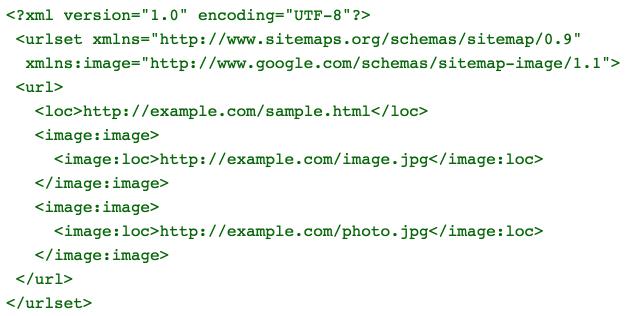
To create an image sitemap, simply add extra information about images on the page to your existing xml sitemap.
Here is Google’s example of a sitemap with image information:

You can add the following image tag definitions:
<image:image>
<image:loc>
<image:caption>
<image:geo_location>
<image:title>
<image:license>

If you want to gain additional image search traffic and ranking, this is a must-have optimization maneuver. Be sure to check out Google’s support article on the topic.

4. Regularly Review and Request Removals From Your Link Profile

Behind every site lurks a powerful and sometimes ominous force. It’s your link profile.
You have limited control over what sites link or don’t link to your site. You could become the victim of a negative SEO attack, or you could be rewarded by links from a high-authority government (.gov) or education (.edu) site.
But you do have some control. You should exercise this control in three ways:
  • Monitor your link profile. Every now and then, scan through the list of sites that are linking to you. This data is available in Google Webmaster Tools. You can also purchase services that will scan your link profile for possible risk.
  • Request low authority or spam sites remove their links to yours. A polite removal request is the best solution to spam links. Simply email the webmaster, informing them of the links and ask that they be removed.
  • Submit a disavow file. Regardless of the SEO brouhaha over the issue, Google has provided a tool that allows you to disavow any links that you deem undesirable.

5. Create Keyword-Specific URLs

Aren’t ranking for a specific keyword? Check your URLs.
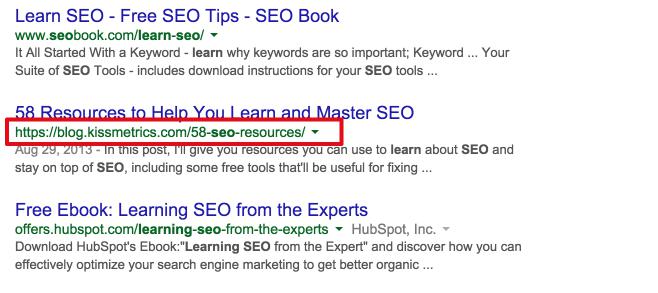
Exact match domains (EMD) are an SEO spam technique of yesteryear, but there is no question that Google still considers the URL to be a significant indication of a page’s relevance, and therefore a ranking factor.
Notice how each of these sites, top-ranked domains for a competitive keyword, have URL pages that use the exact query.

If you are angling for a longtail keyword, I suggest creating a specific targeted page that uses the keyword string in the URL.

6. Use Your Target Keywords Across The Entire Site

One of the lesser-utilized SEO techniques is employing a target keyword throughout the site as a whole. Many SEOs believe (mistakenly) that they can rank for a given keyword by churning out a few blog articles surrounding the keyword. They target a keyword by developing content on one or two pages, but they neglect its presence on the rest of the site.
In reality, Google prefers to see an entire domain that supports the keyword and its semantic variations.

Here’s how you can check this:
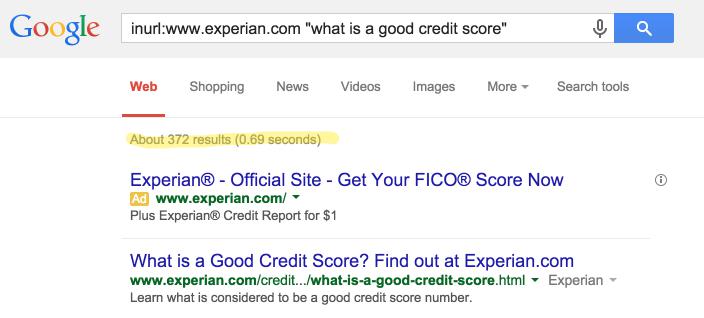
  • Do a Google search for inurl:domain plus the selected keyword in quotation marks.
  • Look at how many results Google provides.
  • Compare this to as many domains or competitors as would be helpful.
Let me show you an example. In the screenshot above, I showed you how the website CreditKarma.com is outranking Experian.com for the keyword “what is a good credit score.”
I recently analyzed the SERPs for this keyword, and found that the top organic result has the highest sitewide saturation for the given keyword. I tested several other semantic variations and found it to be consistently true. The site with the highest sitewide occurrence of a given keyword ranked higher.
Look at the comparison. Here’s CreditKarma.com, the top organic result for “what is a good credit score.”

Here is Experian.com, the second organic result for the same keyword.

CreditKarma.com has 3,500% more occurrences of the keyword than Experian. Even though CreditKarma’s domain authority, page authority, and domain wide link quantity are lower, they still rank higher for that keyword.

My informal survey doesn’t prove that top results will always be backed by the highest occurrence of a keyword throughout the site, but it does suggest it is an important factor in Google’s ranking system. Sites that contain semantic variations and/or keywords throughout have a higher chance of ranking in the SERPs for any given keyword in that semantic domain.

7. Optimize Your Brand’s Social Profiles

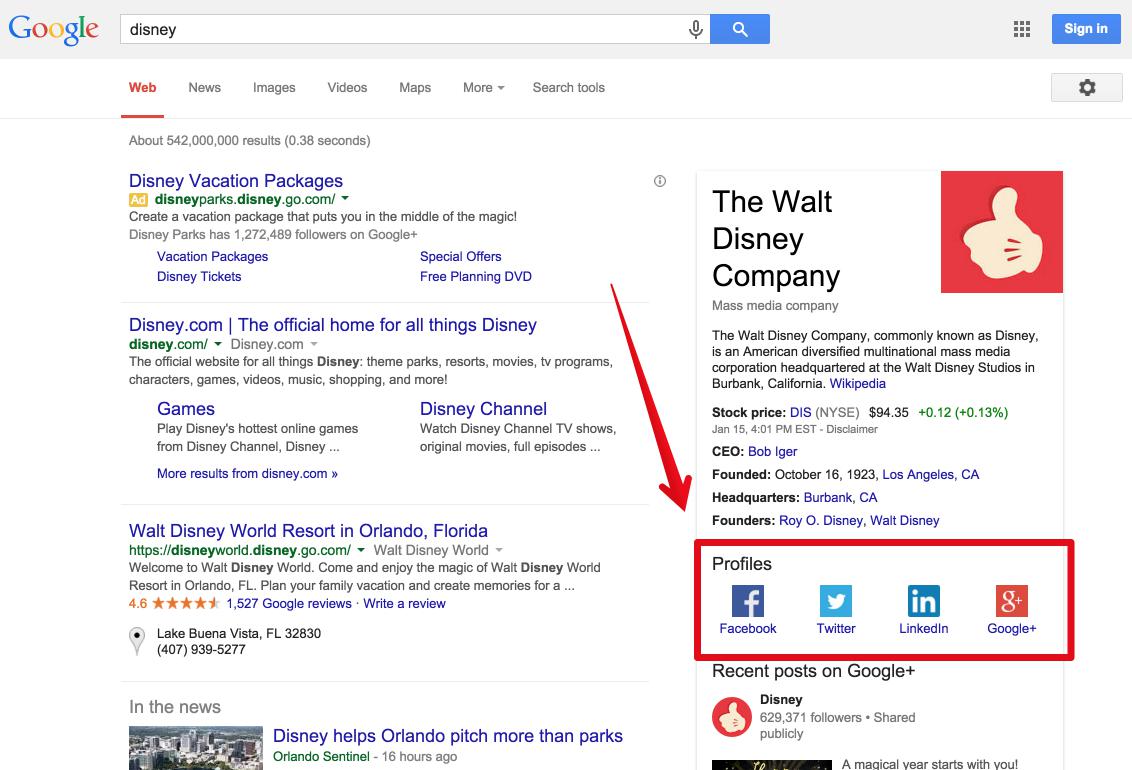
Google’s Knowledge Graph is a significant aspect of SEO that we can’t ignore. Google recently began displaying the social profiles for brands directly in the Knowledge Graph.
It’s not apparent how this will roll out for small to mid-sized businesses. Most of the results I’ve seen are for large corporate brands.
My sense is that Google will continue to refine KG settings to bring up a full array of information for most brands that have optimized social profiles. It’s worth giving some optimization effort to your social accounts.

8. Add Schema Everywhere

According to a study by Searchmetrics, Schema markup shows up in more than a third of all Google’s search results. With this huge SERP preference for Schema, you’d think that sites would be flocking to implement Schema snippets wherever they could.
Well, apparently not. A mere 0.3% of Internet domains are using Schema integration.
This definitely falls into an under-the-hood optimization technique. Learning schema isn’t that difficult, and it will certainly look familiar if you have any coding background or awareness of structured data.
Google has even given you some help with their Structured Data Markup Helper.

Conclusion

No matter where you are at on your SEO journey, there is always more to do. You can spend months optimizing, optimizing, optimizing, and never actually reaching a pinnacle of perfection. However, these under-the-hood optimization techniques will bring you closer to perfection than most sites.