Showing posts with label Business Websites Promotion. Show all posts

Tuesday, April 24, 2018

Get Top SE Rankings with Latest Social Media Practices

Social media marketing and search engine optimization are strategies used by businesses to create a unique identity of their businesses to attract more customers to their websites. These two strategies are highly related since an organization’s availability on social media platforms such as Facebook boosts its search engine rankings.

Business owners often fail to understand the relationship between social media and search engine optimization and how the two can significantly influence Google rankings.

Understanding the relationship between these two aspects and monitoring possible social media practices is crucial for the growth and popularity of your business. Several social media practices can be implemented by your SEO team to improve Google rankings. Here are some latest social media practices that can boost your search engine optimization.

1. Increase the Number of Your Social Media Followers

The Number of followers that any social media profile has greatly influences search engine ratings. Followers of a given website can influence can influence its search engine ranking through search engine optimization boosting. For example, a company with many Facebook likes and twitter followers get a boost in Google ranking compared to its competitors with fewer followers.

It’s essential for a company to attract and build its followers in a more organized and acceptable manner since Google detects any mischievous practices such as paying for twitter followers and Facebook likes. Practices such as opening discussion forums, writing and posting articles are powerful ways of increasing followers on social media platforms.

2. Encourage Social Media Sharing

Enhanced sharing on social media is among the top ways of increasing product awareness and improving your search engine optimization efforts. Make use of external links to access market segments through continuous social media sharing. When you invest heavily in social sharing, there will be increased popularity of your products and brands among customers which influences SEO.

To benefit from social sharing, you need to ensure your posts are creative and attractive. Potential customers are willing to share great your great content across different social media platforms. Increased sharing of your content boosts the number of posts that have your links which boosts your search engine optimization ranking.

3. Optimize Social Media for Searches

This strategy helps in opening up channels to direct your profile viewers to your various posts. These posts can be videos, articles, or even newsletters. Posts are meant to provide opportunities where the company becomes popular on social media and increases the chances of your website ranking better.

Optimization of content on social media platforms will always have a positive impact on your SEO efforts. Focus on providing quality information in your industry through your social media posts. Optimization of social media posts helps in making your website more visible hence pushing forward your search engine optimization strategies.

4. Enhance Your Brand Awareness

The popularity of your site and brand positively correlates with the results of your search engine optimization campaign. Increased brand and site awareness increases the traffic to your website. Social media, therefore, can be used to boost the reputation of your business. Attracting and retaining customers together with increasing the number of searches is greatly influenced by the ability and strength of social media utilization.

As a marketer, you can take advantage of social media platforms to inform your audience on the latest unbeatable discounts, promotions, and new products that you are offering. This will help you to attract more social media users to enhance brand popularity. You will end up attracting more potential clients which increases the number of visitors who come to your site.

5. Optimize Posts Locally

Optimizing and promoting social media posts within your local community provides significant benefits to your SEO campaign. It’s worthy to adapt local search engine optimization since local clients facilitates your business promotion posting information related to your company. You can also engage the local community through various events to boost the popularity of your business brands. Any content on social media from the local community boosts the search engine optimization process.

6. Encourage External Inbound Links      

Social media platforms offer you a great opportunity to link your content to external sources. The external links you have, the higher the Google ranking you get. To attract more visitors, you will have to publish high quality and authoritative content to attract authoritative external links as well. Also, remember to use social media channel to spread your useful and original content which serves as a bait to social media users. Doing so not only increases your chances of attracting authoritative external link but also boosts your social media reputation.

Friday, April 13, 2018

Get Better On-Page SEO Impact on Your Business Websites

With so many businesses being launched everyday, how can you ensure that yours stands out? If your business has a good, first page ranking in search engine results, what can you do to stay on top?
  
Studies show that on desktops, the top-ranking page in Google search results has a conversion rate of almost 35%. And on mobile devices, its conversion rate is almost 32%. This shows how important it is to improve your search engine ranking and boost your site’s visibility.

SEO helps you optimize your website so that more users are able to find you on the internet. 61% of marketers say that SEO is a top priority when it comes to inbound marketing. This means that the competition is getting tougher. You need to build your brand’s presence online by taking steps to improve search engine rankings. 

Optimization of keywords, meta tags, title tags, and URLs are some of the common ways to improve a website’s SEO. But with changes and updates in how search engines rank a website, you need more than that. That is where on-page and off-page SEO come in. And this post is going to focus on on-page SEO.

On-page SEO involves optimizing a web page through internal organization, while off-page SEO refers to external configurations. 

Here are some of the best ways you can improve your on-page SEO:

1. Maintaining Website Speed

47% of customers believe that it shouldn’t take longer than 2 seconds for a web page to load. And even a second of delay can reduce your pageviews by 11%, and your conversions by 7%. A fast loading website is the key to an engaged audience. On the other hand, a slow-loading page makes people impatient, which leads to a higher bounce rate. 

For Google, a website that loads faster gets a higher ranking in search engines. Google’s PageSpeed Insights helps you determine the total time taken for your website to load. Once you know what’s slowing you down, you can take the necessary steps to improve your website speed.

2. Using AMP

Mobiles account for over 50% of website traffic, and this number is only going to increase in the coming years. For this, it is important that websites load almost as fast on mobiles as they do on desktops. This is what led to the creation of Accelerated Mobile Pages or AMP.

AMP is nothing but a coding standard that helps websites load instantly on mobile phones. When you do a simple Google search, all the top-ranking results have an AMP tag, especially when it comes to news stories. You’ll be able to see a little lightning bolt symbol on top. 

Although it is not owned by Google, it has the company’s support. This basically means that when it comes to indexing websites, Google’s search engine algorithm will consider AMP. With AMP, websites have seen a 20% increase in sales conversions.

3. Responsive Site

A responsive site means that the site has been designed to cater to the design needs of different devices. In 2015, Google announced that mobile-friendliness of a website will be an important criteria in search engine rankings.

Mobile search optimization is important for strong on-page SEO since there are more people using smartphones. At least 90% of people in the U.S. use a smartphone. People use smartphones for searches to buy things, to read, and to access social media. 

Desktop websites are heavy and cannot load as well on mobiles and tablets. To improve user experience, businesses need a responsive design so that desktop, mobile, and tablet users all have the same experience. The idea is to ensure that the website understands which device is in use, and then adapts to it.

4. Creating Engaging Content

Nothing beats good content when it comes to search engine rankings. Original and relevant content gets a better search ranking. 

For Google to crawl a website, the content needs to be at least 500 words. In fact, the average length of articles on the first page of Google ranking is 1,890 words. Long-form content of over 1,000 words tends to get more likes and shares. This means more visibility in search engines.

Make sure that the content is written in a simple and concise way. People should be able to understand what you’re saying so they can stay engaged, otherwise they will simply bounce away. 

Using Long-tail Keywords for Optimizing Content

Keyword optimization is important when it comes to SEO but with long-tail keywords, your website will get more diverse and relevant traffic. There will be plenty of websites which may be using same or similar generic keywords but if you want to target your niche, you need to stand out.

A long-tail keyword may not be used very often in search engines but they lead to a target relevant audience. Long-tail keywords are valuable and more specific to a customer’s needs.

Run a competitors search and figure out all good keywords that your competitor is targeting then start from there to get some traction. There could be 100’s of long tail keywords to monitor for which your website might be ranking but that are unknown to you. A ranking tracking tool like ProRankTracker can be a great help in this area.

5. Use of Internal Links

Internal links connect a web page with another page on the same website. If your web page contains 2-3 internal links, then it helps the search engine determine the relationship between the pages. A search engine crawler then gets an idea what your website is all about and then ranks your site accordingly.

That’s why internal links are important for good on-page SEO. They help a user navigate your website smoothly. And even for a search engine crawler, if there are no internal links, those web pages are left out of indexing and they simply don’t exist. A good website should have links to other relevant internal pages spread out evenly throughout the website.

6. Use of HTTPs

In 2014, Google made HTTPS encryption for URLs a ranking signal. HTTPS or Hyper Text Transfer Protocol Secure is basically a website security certificate known as the SSL or Secure Socket Layer certificate.

This makes any kind of data breach difficult by making any external sharing of data almost impossible. HTTPS makes a website trusted by Google. It is very important for ecommerce and banking websites especially when more people are making online transactions.

It is believed that HTTPS enabled sites get a very minor boost in search engine rankings, but it is still important for on-page SEO, especially since Chrome puts a “not secure” mark on non-HTTPS sites. Seeing this mark could alarm many of your visitors, who could end up leaving soon after landing on your site. This will increase your bounce rate, affecting your search ranking. 

7. Use of Structured Data

Structured data is nothing but organized data. In SEO, structured data means a markup on the web page that provides more details about its content. It helps search engines to go through your website and understand what it is about.

Here’s how it will look in search results pages. People will be able to see details such as the star rating, number of reviews, price, stock status, etc.

Search engines like Google have a markup tool that can help you with structured data for your website for improving on-page SEO. Structured data means enhanced search results with more images, videos, GIFs and other styling elements. This increases click-through rates and drives traffic.

Conclusion 

Google, the undisputed market leader in search engines, has made a lot of changes in its search algorithm in the last few years. With these new factors for website ranking such as good loading speed, AMP, HTTPS, internal links, structured data, and engaging content, SEO has become all the more technical. 

Boosting on-page SEO through these techniques is time-consuming, and can be a problem for someone who doesn’t understand these technicalities. If you know more ways to improve on-page SEO, let us know in the comments below.


Wednesday, February 8, 2017

SEO Tips to Focus for Ranking Websites in 2017

Now days, nearly every online businesses are preparing blueprints for SEO to gain better ranking for their targeted keywords on the SERPs in 2017.

While there are more than 200 different factors that contribute to a brand’s overall placement for particular queries, there are certain trends emerging and steadfast rules for ranking that are important to consider as we move into the New Year.

If you are on the hunt for the latest trends and SEO rules of engagement for 2017, look no further. Here are the top five practices you should be concerning yourself with throughout 2017.

Making Mobile-Friendly Websites

No major revelations here. Over the past several years, mobile’s importance has continued to grow and its impact on SEO has become increasingly dramatic.

Google has, in no uncertain terms, laid out its agenda as it relates to mobile; and it is soon to top the list of search priorities.

Over the course of 2016, SEOs, marketers and business owners saw Google ramp up the uses of Accelerated Mobile Pages by introducing it organically into the SERPs, advertisements and even eCommerce offerings.

This was only the tip of the iceberg, however — the biggest mobile-related announcement came in November when Google revealed its mobile-first indexing exercise.

While these are only a couple examples of how Google is turning its attention toward mobile, the overall consensus is that your business should be doing the same.

It is now a necessity to have a mobile version of your website. Moreover, it is becoming vital that your company adopt AMP for content offerings, increase mobile page speeds, and hone in on a truly unique and beneficial user experience.

Quality Link Building Campaign

This is one of those things that remains a staple in 2017 SEO practices; and will likely always be around in one form or another.

In the past few years, content marketers have generated more articles, blogs and videos than people can consume; and much of it is the same rehashed drivel.

Don’t worry so much about meeting a “content quota,” instead, your main goal is to produce truly useful materials as it relates to your niche; that’s what users care about, and that’s what Google cares about. Quality content is the entire focus of the Panda algorithm update.

Forget about article spinning and other ways to crank out content for the sake of content. Place your focus on creating highly-informative, evergreen content; something that users can leverage for years to come.
This leads us into our next content-related rule:

Targeting Long-tail Keyword in Content

In-depth content that intimately covers a given topic is not something new to 2017, but there are some changes on the horizon.

Over the past couple of years, various studies have been produced which clearly show the benefits of long-form content. One particular study even showed that the top slots in the Google SERPs went to content that contained more than 2,000 words.

Of course, the goal is not to create ultra-long content stuffed with fluff; it is to generate serious value for readers. Something that can genuinely help them understand a topic and improve.

The mobile-driven future, however, likely has other plans for content. While it is still ideal to create comprehensive materials for desktop, small screen devices will begin to require information-dense articles that are relatively short.

This is mainly because mobile devices are not optimized for long-form content but are emerging as the most favorable platform for the masses. As this trend continues to mature, so will the nature of the content that is served to mobile users.

Semantics are Significant 

Google has been focusing more and more on user intent in recent years. And the proliferation of voice search technology has only served to amplify that pursuit.

Google is on a path of constant improvement as it relates to user experience. This means the company is continually trying to provide the most relevant and helpful links for user queries; the best way to do that is to understand the user’s intention for the search.

In 2017, SEOs will need to continue to adjust their keyword strategies to further identify key-phrases that relate to why users would seek out their website, product, or service. Keywords are often too broad to understand a user’s motive. By really focusing on detailed phrases, you are far more likely to reap SEO benefits in 2017.

Targeting Local and Regional Search Engines

A lot of SEOs and business owners get so caught up in feverishly trying to rank on Google that they completely neglect other platforms; ignoring other search engines is a mistake.

In late 2015, Bing attained a 21 percent market share and is currently growing faster than Google. Considering that there are roughly 3.4 billion Internet users, this translates to approximately 714 million users that are missed by not leveraging Bing.

More importantly, these figures could see massive growth in 2017 as personal assistants Siri and Cortana utilize Bing as their default engines; Cortana already has more than 100 million monthly active users.

In 2017, put significant effort toward understanding Bing’s best practices, ensuring your pages are indexed with the engine, and optimizing your pages for better results. It wouldn’t hurt to secure some advertising space on the platform either.

Creating a powerful SEO strategy in 2017 comes down to focusing on what makes for a better user experience; that’s what Google is after. The more you place a spotlight on user intent, user-centric content, and great mobile offerings, the more Google will acknowledge your efforts.

Which of these SEO tips are already part of your 2017 plans?

Let us know in the comments below.

Saturday, October 22, 2016

Keywords Research Tips Matching with Latest SEO Trends

Keywords are the fundamental particles for a SEO campaign of any online Business website. Around this complete Search Engine Marketing plan rotates. Targeting keywords for a particular website or online business comes after an extensive analysis of brand value, local searches, related users category and the searching practice of Search Engine Users. This trend of keywords research have been significantly changing in last few years up to 2016 and the process may continue in future to rank better in SERPs and save the websites from adverse effect of Search engines like Google, Bing, Yahoo etc.
 
Keywords research is very essential before starting any SEO practice and facilitates to drive organic traffic to your website through different local search engines. Keywords decide who comes to your website with what purpose. The better Keywords analysis is performed, brighter the prospects of getting unique traffic hence fulfills your business goals.
In 2016, the things have significantly changed in the arena of search engines, SEO and keywords research. Google is better at analyzing content, back links and search results than before. This entire process brings new challenges and opportunities at the same time for the SEOs and internet marketers.

Keywords research strategies of a website must accomplish the requirements of both the visitors and the search engines.

Some of the “must do” trends for finding targeted Keywords are as follows:

Choose Unique Keywords from Product/Services of your Website

By choosing unique keywords from the product and services your website is displaying, have the better chance to rank in top positions of SERPs.
Assuming that you are serious about producing quality content, you should use high intent, meaningful topics and write unique keywords with quality content.

Use Updated Keyword Suggestion Tools

By using keyword suggestion tools like Keyword Planner, SEO Stack and Uber Suggest, you will get keyword ideas and search results from Google, Bing and Yahoo. Gather keywords from multiple sources to analyze, filter those by targeting your local search keywords.

Get Keywords from Social Networking Websites

Keyword Suggestion tools may not disclose keywords or ideas those exist in social networks, niche forum sites, question answer sites etc. There are many other social sharing sites where you can find popular content and topics like Reddit, Pinterest, Google+, Buzzsumo and many others.

Monitor Keywords Research Trends

Analyzing keywords trends give you a glimpse of what kind of keywords might come next in a few months or years. Planning content in advance for such keywords could be a great strategy to take lead ahead of your competitors.

Google Trends can show you keywords that have become popular recently with the traffic charts. Targeting these keywords in your content could get you ranked without much SEO, since competition on these keywords might be lower.

Other than Google Trends, social network sites and social sharing sites also help to discover new topics. Whenever something new has arrived, people discuss it everywhere. You just need to keep a vigil and act prompt.

Analyze Competitors’ Keywords

Analyzing your competitors’ keywords from its websites and blogs you can get clear idea about their targeted keywords and rankings. It also helps to carry out better back link strategy in SEO campaign. You can use free and paid tools for better competitors’ analysis.

Target on Long-tail Keywords

By targeting long tail keywords with 3-5 words easy to get in top search results. Long keywords are specific, low in competition and more relevant to locality or any subject. Now days Google also gives focus to long-tail keyword for better ranking.

Choose Keywords Allied to Page Content

While choosing keywords for individual pages, consider the page title and content at first. This will help your web pages more relevant to targeted keywords. Also put those keywords in meta title, description and header tags of corresponding pages for better search engine visibility.

Research your Business Keywords Regularly

Research and update your keywords with new ones on the regular intervals by analyzing the search results from Google Webmasters Tool.

Always try to collect more specific keywords for your local business from social networking sites, relevant blogs, articles and your local markets. According to your keywords update the webpage content and Blog pages with latest news or related stuffs that make interest in visitors.

Friday, August 19, 2016

Existing Content Optimization Techniques

Now days Content Optimization is a main weapon of SEO Campaign for a Business Website. No matter how many SEO tools, tricks and best practices you implement, you won’t attain significant results without content incorporated into strategy.

Content Optimization is a highly successful and widely used modality of driving traffic, educating consumers, escalating sales and pushing a site higher in the Search Engine Result Pages. As we all know, however, the space is becoming more competitive by the day as more and more brands generate content.

Just because a piece of content was created months or years ago doesn’t mean it no longer holds value; a little modernization is all that is often needed. In order to determine if a particular post needs to be updated, start first by looking at similar content to see if more recent publications are trumping yours.

Once you have compiled your existing contents, you can begin reworking these pieces to drive a new wave of results.

The first step in this process is to determine if there have been any new happenings or recent developments on your topic since the original piece was produced; you want your content to be as up-to-date and accurate as possible.

Next, it’s wise to conduct keyword research again. If your content is more than a year old, the best words and phrases to leverage may have changed. A few years back, long-tailed keywords did not have the power they do today. Mobile and voice-to-text search have both greatly altered the way people present queries; this needs to be taken into consideration when formulating your keyword strategy. Also, be sure to optimize your publication for semantic search by including companion keywords, utilizing synonyms and variations of words, and writing in your audience’s organic language.

With older pieces of content, there is a good chance that many of the links that were once present are now broken; remove any of these defunct portals. Take things further by strengthening your internal linking through incorporating hyperlinks to other relevant content that holds authority. Additionally, you will want to bolster the number of links to respected websites. High authority sites are those such as reputable news sources, educational sites and other trusted and high-ranking pages. Search engines take into consideration these types of links, giving your content credit as a more trustworthy destination.

Once you have updated your content to include more current information, relevant and high-ranking keywords, and plenty of authoritative internal and external links, it is time to promote it all over again. Publish the piece on various social media websites, send out the update to your email subscribers, push it to the homepage of your webpage; use all the tricks in your marketing toolkit. People won’t be interested in your newly revamped content if they don’t know that it exists.

Not all content needs to be deeply researched and created from scratch. You can save tons of time and energy by simply resurrecting old content with new information and allowing it to work its magic all over again. The key is to make sure that you abide by today’s best practices, incorporate the most cutting edge information possible, and to be sure that your offerings are useful by offering up direct answers to some of the most common questions your audience has. Don’t let your old brilliant ideas become irrelevant. Re-purposed content is an SEO goldmine.

Tuesday, July 14, 2015

Search Engine Optimization Tips for Business Website Owners

Search engine optimization is that almost important for all publishers and business owners online. This should not come as a surprise since search engine optimization SEO is considered as the key in doing well in the eyes of search engines. What this
means is that in order to get ahead of the competition, then you must do your SEO much better. This is the only way for you to get ahead with the rest that also take search engine optimization seriously. Here are some suggestions on how you can out-do your competitors:

1. One important thing to do is to research the keywords well. And when you have identified the keywords for use in the content pages and the site, then its best that you should use the keywords on the right places. The right places include insertions of the keywords on the title tags, the Meta tags and the Alt for images. The links should be properly formatted as well. When using the keywords on the content, it should be kept in mind that there is a science as well in using the keywords.
Don't overdo the use of the keywords. Based on the experiences of experienced publishers, the keyword density for content should not exceed 2 percent. Even in terms of keyword placement, there is a rule in doing this. To many, it is best to put the keyword on the title, the first sentence, the second paragraph and on the last sentence.

2. Next up to the identification of keywords is the creation of great and helpful content. Users and readers should learn a thing or two about the content that you will provide. The better the content on the site, the higher the chances of being valued well by search engines. Also the contents that are posted on the site should be regularly updated, whether the update is daily or weekly it doesn't actually matter. And speaking of the articles, it is a good move to have a title that speaks about the actual content.

The content that can be posted on the site can be written by you or you can re-post content that has been used somewhere else. But when you do this, make sure that you republish the content with consent. If you are not good at writing articles, then you can let others write the content for you. The investment for this is minimal but the returns can be huge.

3. Try creating a Google site map which can be used by the search engine. There is a tool online that can guide you in the creation of the site map.

4. Another good move is to publish the articles to article directories and other article submission websites. Now, this article should have links that will point back to your website.
This is a good move since search engines like to look at the inward pointing links to the site. The higher the page ranking of the site that points to your site, the better.

5. And finally, it's best if you can read the suggestions offered by Google. The search engine giant has drafted its Webmaster Guidelines, detailing the best practices that should be adopted by anyone wishing to get noticed by Google.


By doing all these recommended search engine optimization actions, you can be sure that your efforts will generate returns better than what the rest is gaining.

Thursday, March 5, 2015

7-Under-Hood Optimization Techniques for Rocking SEO


Whether you’re an SEO at the top of your game, or a site owner looking to do more with your SEO, this article is for you.
 
Most SEO advice is pretty straightforward (and worn out): Optimize your title tags! Content is king! Use a sitemap!

I get all that. And that’s fine advice. And you should do it. But sometimes we need a little bit more — those under-the-hood optimizations that can move the needle even further for SEO. I’m about to give you seven of my secret weapons for doing just that.

Just so you don’t get your hopes up too high, I’m not providing any home run hacks that are going to boost you to the top of the SERPs by tomorrow morning. SEO doesn’t work that way. These seven techniques are reputable, slow-but-steady, and hard work.

But they do work.
SEO Tips - Dillip Kumar Barik - SEO Expert

1. Make Your Site Secure

Google has tipped its hand regarding one of their newest ranking factors: Site security.
In the summer of 2014, Google declared that HTTPS is now a ranking signal. Although its immediate impact on the search landscape is marginal, we can expect this signal to grow stronger as time goes on.

Security, with all its massive disruptions of late, is a big deal for users, and therefore for Google. We as SEOs need to understand this. Although we crave data — especially the data that gets snatched away from us (not provided) — we still need to respect the limits of privacy.
If you have the ability and/or resources, add encryption to your site. In addition to being a ranking signal, it is also a user signal. Sites with encryption are recognized in the SERPs with an “https://” preceding the URL, unlike non-secured sites.


This little change in the SERPs alerts conscientious users to the presence or absence of a security layer on a given site, which may in turn affect click-throughs, bounce rates, and dwell time.

2. Add Above-the-Fold Images or Videos With Full Optimization

We all know images and videos can improve a site’s ability to engage users. What we may not realize, however, is that such images can improve a site’s ranking in Image or Universal Search.
The click-through rates for no-image pages are, on average, lower than pages that contain images. Although the first position results gain higher CTRs (20% vs. 10%) for no-image pages, the tables turn in the third through tenth SERP positions. For these results, users show a preference for pages that contain images.
Here is research from Jim Yu in his discussion from Search Engine Land. The chart indicates CTRs for image vs. no-image SERP entries.

To make your images as SERP-supported as possible, you need to optimize them. Here are the most important features for optimization:
  • Make the size of the image appropriate to the necessary resolution. Get the file as small as possible to improve page load times.
  • Add alt text.
  • Title the image appropriately, using keywords if at all possible.
  • Use a good quality image. It’s for the users, remember.
  • Add supporting Schema for the image.
You can use videos, too, with similar results in the SERPs. The additional effort of adding above-the-fold images and video is that it improves SERP rankings while also adding value for the user. Value for the user means your site visitors will click through more frequently, bounce less, stay longer, and thereby improve your rankings.

3. Create an Image Sitemap

Every search engine professional understands the importance of an HTML sitemap and an XML sitemap. I’m suggesting that you create an image sitemap.
So, what’s an image sitemap? And how many sites even have one?
Not many sites have an image sitemap. That’s why we’re under the hood right now. This optimization will boost your rankings particularly in Google’s Image Search.
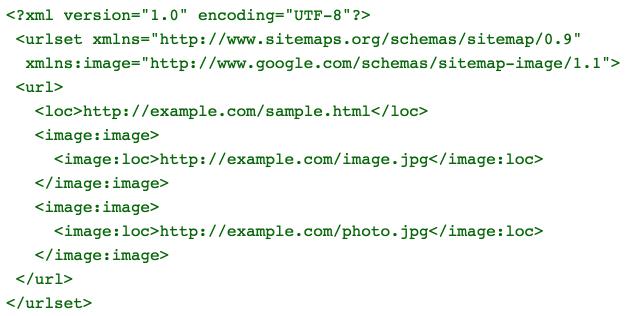
To create an image sitemap, simply add extra information about images on the page to your existing xml sitemap.
Here is Google’s example of a sitemap with image information:

You can add the following image tag definitions:
<image:image>
<image:loc>
<image:caption>
<image:geo_location>
<image:title>
<image:license>

If you want to gain additional image search traffic and ranking, this is a must-have optimization maneuver. Be sure to check out Google’s support article on the topic.

4. Regularly Review and Request Removals From Your Link Profile

Behind every site lurks a powerful and sometimes ominous force. It’s your link profile.
You have limited control over what sites link or don’t link to your site. You could become the victim of a negative SEO attack, or you could be rewarded by links from a high-authority government (.gov) or education (.edu) site.
But you do have some control. You should exercise this control in three ways:
  • Monitor your link profile. Every now and then, scan through the list of sites that are linking to you. This data is available in Google Webmaster Tools. You can also purchase services that will scan your link profile for possible risk.
  • Request low authority or spam sites remove their links to yours. A polite removal request is the best solution to spam links. Simply email the webmaster, informing them of the links and ask that they be removed.
  • Submit a disavow file. Regardless of the SEO brouhaha over the issue, Google has provided a tool that allows you to disavow any links that you deem undesirable.

5. Create Keyword-Specific URLs

Aren’t ranking for a specific keyword? Check your URLs.
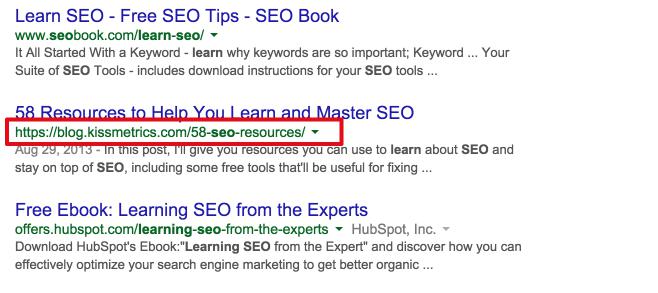
Exact match domains (EMD) are an SEO spam technique of yesteryear, but there is no question that Google still considers the URL to be a significant indication of a page’s relevance, and therefore a ranking factor.
Notice how each of these sites, top-ranked domains for a competitive keyword, have URL pages that use the exact query.

If you are angling for a longtail keyword, I suggest creating a specific targeted page that uses the keyword string in the URL.

6. Use Your Target Keywords Across The Entire Site

One of the lesser-utilized SEO techniques is employing a target keyword throughout the site as a whole. Many SEOs believe (mistakenly) that they can rank for a given keyword by churning out a few blog articles surrounding the keyword. They target a keyword by developing content on one or two pages, but they neglect its presence on the rest of the site.
In reality, Google prefers to see an entire domain that supports the keyword and its semantic variations.

Here’s how you can check this:
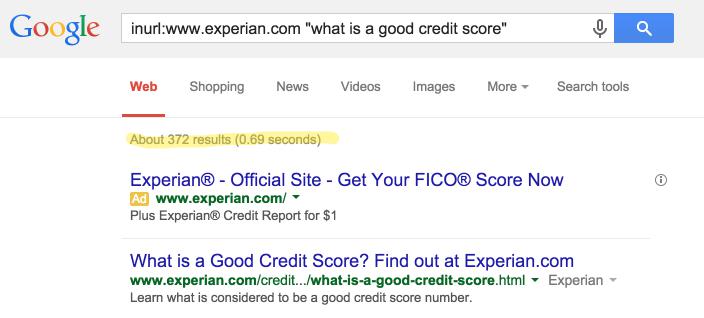
  • Do a Google search for inurl:domain plus the selected keyword in quotation marks.
  • Look at how many results Google provides.
  • Compare this to as many domains or competitors as would be helpful.
Let me show you an example. In the screenshot above, I showed you how the website CreditKarma.com is outranking Experian.com for the keyword “what is a good credit score.”
I recently analyzed the SERPs for this keyword, and found that the top organic result has the highest sitewide saturation for the given keyword. I tested several other semantic variations and found it to be consistently true. The site with the highest sitewide occurrence of a given keyword ranked higher.
Look at the comparison. Here’s CreditKarma.com, the top organic result for “what is a good credit score.”

Here is Experian.com, the second organic result for the same keyword.

CreditKarma.com has 3,500% more occurrences of the keyword than Experian. Even though CreditKarma’s domain authority, page authority, and domain wide link quantity are lower, they still rank higher for that keyword.

My informal survey doesn’t prove that top results will always be backed by the highest occurrence of a keyword throughout the site, but it does suggest it is an important factor in Google’s ranking system. Sites that contain semantic variations and/or keywords throughout have a higher chance of ranking in the SERPs for any given keyword in that semantic domain.

7. Optimize Your Brand’s Social Profiles

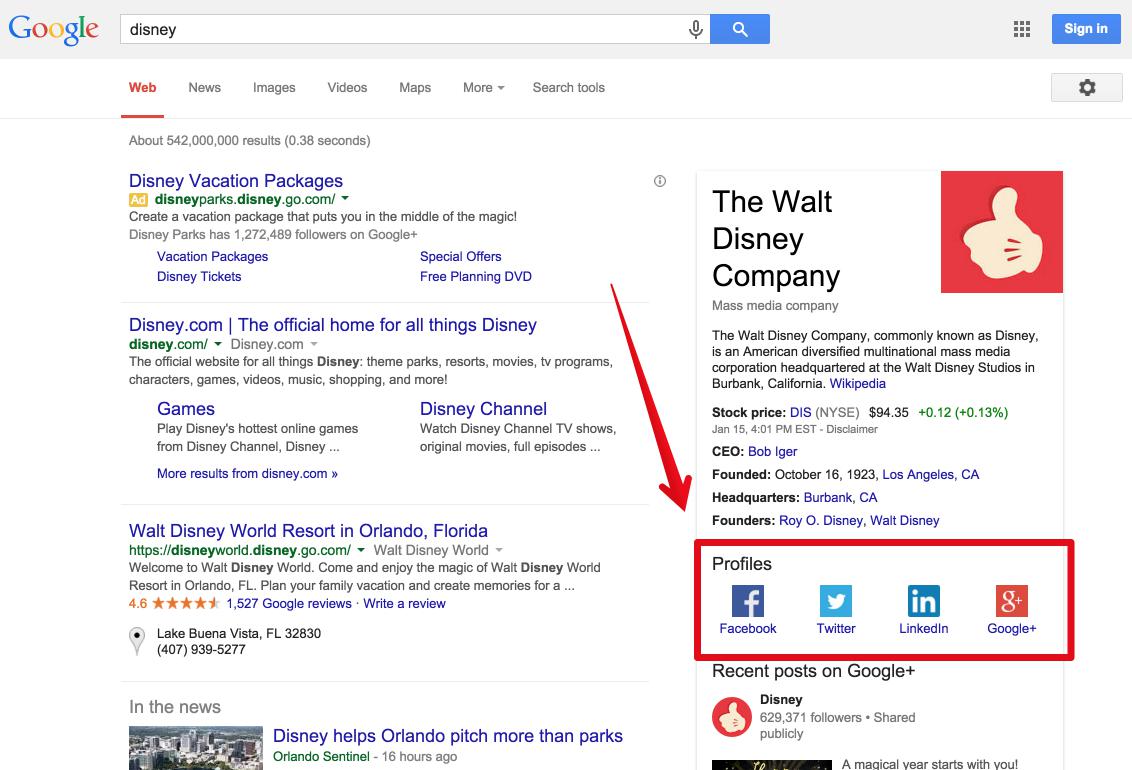
Google’s Knowledge Graph is a significant aspect of SEO that we can’t ignore. Google recently began displaying the social profiles for brands directly in the Knowledge Graph.
It’s not apparent how this will roll out for small to mid-sized businesses. Most of the results I’ve seen are for large corporate brands.
My sense is that Google will continue to refine KG settings to bring up a full array of information for most brands that have optimized social profiles. It’s worth giving some optimization effort to your social accounts.

8. Add Schema Everywhere

According to a study by Searchmetrics, Schema markup shows up in more than a third of all Google’s search results. With this huge SERP preference for Schema, you’d think that sites would be flocking to implement Schema snippets wherever they could.
Well, apparently not. A mere 0.3% of Internet domains are using Schema integration.
This definitely falls into an under-the-hood optimization technique. Learning schema isn’t that difficult, and it will certainly look familiar if you have any coding background or awareness of structured data.
Google has even given you some help with their Structured Data Markup Helper.

Conclusion

No matter where you are at on your SEO journey, there is always more to do. You can spend months optimizing, optimizing, optimizing, and never actually reaching a pinnacle of perfection. However, these under-the-hood optimization techniques will bring you closer to perfection than most sites.