Showing posts with label Content Marketing Tips. Show all posts

Saturday, September 2, 2017

Do SEO to Generate Business Leads from your Website

A website parked on the internet, without SEO and some-one constantly tweaking the SEO, will never be found in online searches and will never generate an organic business lead.

Organic leads that convert into sales, are certainly more cost effective for your business than leads obtained through PPC (Pay per Click) marketing. The key purpose of SEO is to attract organic leads to your website, rather than the websites of your competition.

The best way to ensure organic leads come to your business, rather than going to one of your competitors, is to rank higher than them in search engine query results, for your chosen keywords. This can only be achieved, if you incorporate quality SEO work, into your website strategy.

It is important to rank higher than your competition because the top few search results delivered up by search engines, generally gain most of the traffic for the search term, and any result that is not displayed on the first page of delivered search results, rarely see much traffic.

Like most business owners, you invest in a website so that your target audience can search and find you, when needing the products or services you provide. To achieve visibility, each of your web pages (and sometimes sub-pages), needs to be optimized to be found by search engines.

SEO Tips - DillipKumarBarik.Blogspot.com
You may have read that SEO is also about branding and marketing, and whilst it may contribute somewhat in these areas, the key role of SEO is to ensure your website meets all the ever-changing requirements of the search engines, whose role it is to provide searchers with the most relevant results, for the search term from the businesses that they (in their own way) determine, are more important and have a level of authority.

To enable your website to become a lead generation machine, you must make sure you match your customers goals, with those of your business.
This is easier said than done, and SEO is how you do it. Here is the process;
  • Firstly, you must research and select the most relevant keywords that potential customers use when searching for the products or services offered by your business.
  • Secondly, you need to choose which of these keywords, you will focus on, when attempting to rank your business higher, in future search results.
  • Thirdly, you then need to optimize your website for these keywords, and
  • Fourthly, begin the process of incorporating the keywords into your content, as appropriate and without resorting to keyword stuffing.
It also pays to understand, that multiple keywords that are searched for less often, sometimes generate more leads for your business from your website, than one heavily searched for keyword.

Patience is the key with SEO. You need to commit to ongoing SEO work, and allow time for the work to move your business, up the search rankings. You can further help the process of improving search engine rankings, by frequently posting additional content to your website. Such content needs to be quality content, the fresher and more unique, the better.

Tuesday, June 13, 2017

Essential SEO Promotion Stages for Websites

Just like everything else in the world, SEO promotion doesn’t have one single all-purpose algorithm of success. This algorithm may vary depending on a country where you are promoting, a specificity of the promoted site and others. But there is still something every SEO should include in any promotion strategy. In this article, you’ll find 11 stages of SEO promotion that no webmaster can miss.

Analysis of the site, niche, and competitors

When the SEO specialist gets access to Analytics and Webmasters, he/she conducts the primary analysis of the goods and services of the project, and also gives an overall assessment of the website. It’s needed to determine what to do with a site, and to build the future promotion strategy. These are the exact steps the webmaster should take:
  • Check website’s position in SERP for the keywords of different search volume
  • Conduct a competitor analysis to find out what exactly to focus on in this niche
  • Analyze the structure and backlinks profile of the top websites within the niche
  • Make suggestions to optimize the site.
  • Analyze the demand and seasonality on the basis of SERPs data
All these are needed to define whether the site needs global changes.

Keyword Research

At this stage, the specialist collects, clusters and checks the search volume of the list of queries that people use to find your site. This is necessary to form the structure of the site, generate meta tags, write texts for landing pages, create internal links and conduct the off-page optimization.
While researching, the SEO specialist may collect a couple hundred keywords. The process of compiling a qualitative list of keywords is long and can take up to several months. Therefore, the promotion strategy must be composed in such way that this task is being worked on, other SEO tasks could also be performed.

Creating a broad structure of the site

Search engine algorithms are being improved the whole time to provide users with the most relevant information in SERP.
If you’d like your site to appear at the top of the search results, you have to focus on creating an expanded structure. Thus, every group of keywords should have its own optimized landing page.
At the same time, it is important to remember that for super-low frequency queries (the ones that were searched for less than 5 times in a month) it is better to optimize the particular product cards, since they will only interfere with the promotion of important pages, taking away from them a part of the internal static weight.
Сategories are usually created for the high-frequency and middle-frequency requests, while low-frequency requests are used to create filter pages and intersections of filter pages.

How might you get fresh ideas for creating the new landing page?
  • Analysis of the SERP
  • Analysis of competitors
  • Internal research on the site
  • Analysis of the products/services range
For large stores/bulletin boards/marketplaces targeted on different cities, as well as the companies with branches, the number of landing pages in the structure should be multiplied by the number of cities. And it’s still to keep the content of such pages unique.
But it is a complicated and lengthy process that in larger projects may take more than a year to cover in its entirety. However, if you want to get the desired effect faster, the bulk of the work on expanding the structure of landing pages should be done very early.

Drawing up an on-page SEO task

At this stage, it’s mandatory to do the following:
  • Creating the title and description meta tags for the h1 header
  • Creating a friendly URL
  • Optimizing the filters, making up the rules of URLs  and meta tags creation, and links visibility
  • Speeding up the server response and the site loading
  • Deleting duplicate pages, redirects, canonical pages, internal noindex and nofollow tags
  • Creating the XML map of the website
  • Setting up the multi-language if necessary
  • Optimizing the pagination pages
  • Adjusting micro-markup of reviews and information on the product cards page

Setting up internal site linking

Frequently, lack of inner Page Rank for landing pages is the cause of the site poor ranking. Let me explain what it means.
You have not only to create landing pages, but also set up a cross-linking between them. In such way, both users and the search robot will easily find and pass to other pages. Otherwise, some pages may not appear in the search engine index.

Content optimization

The webmaster should optimize text and pictures and the whole content on the site. He creates a unique title, description meta tags and h1 headers. Also, it is at this exact stage when the previously collected keywords are distributed all over the website. It is crucial to do this carefully so that the text doesn’t look spammy. Spammy text not only annoy readers, but also search engines have long since learned to distinguish them. And this means that unnecessarily stuffing your articles with keywords can land you with a penalty.

Optimizing the Crawling Budget

The Crawling Budget is the number of pages which the robot can scan on the site at one time. This number is limited. If you don’t close irrelevant pages on your website from indexation, some relevant ones may remain unindexed in the search engine.

By irrelevant pages I mean, for example, pages of useless filters, for which there are no requests or very few of them. Or pages with different sorts: by price, rating, number of products per page, etc. Not closing such ones from indexing is a bad mistake. The Crawling Budget is a delicate matter, and it’s probably important that only experienced specialists should work with it.

Thus, at this stage, experts are closing the “irrelevant pages,” created only for the convenience of users,  from indexing, and leaving only the necessary filters, prohibiting robots from circumventing “irrelevant pages” by closing the links to them.

Improving the Website Usability

Clearly, one of the most important ranking factors of any website is user behavior. It’s good when users stay long on your site because if they don’t, and almost every visitor closes your site in a second, Google will understand that it contains irrelevant information.
Of course, black hat methods like using robots to artificially wind these indicators may help. However, it’s only a matter of time before Google reveals such practices and penalizes you. So it’s better to improve it in a natural way, by creating useful content and, of course, using the right keywords.
So, at this stage, the specialist will give recommendations on how to:
  • Reduce the bounce rate
  • Increase the duration of users stay on the page

Off-page SEO

After the off-page SEO, I mean good old backlinks profile building. Links to your website from other sources are crucial as this is one more way Google understands that the information on your website is relevant. Sure, in some fields with low competition, you may not be able to pay considerable attention to links. But let’s be frank, how many such fields are left in 2017?
So, the more respectable websites are referring to your site, the more your own site’s authority is growing. Checking things about your backlinks profile and your authority in Google’s eyes is simple if using special backlinks analysis tools.

Increasing your Website’s Conversion

You are launching a new eCommerce site, have promoted it by SEO or PPC, yet aren’t get much in the way of results? Apparently, your site requires change. Here’s what a specialist can advise at this stage:
  • Full redesign of the site – for example, expansion of the site structure, adaptive layout, indicating the sum for free delivery, the ability to enter a discount coupon, improvement of the structure of the blog, and so on
  • Improving the quantity and quality of the photos of goods on the website
  • Improving the quality of descriptions, characteristics, information about the product while adding tables with technical characteristics, and creating ample opportunities for filtering goods, etc.
  • Adding reviews on the store and product reviews in a prominent place on the site
  • Adding the “similar goods” block (“goods in the same price category,” etc.)
  • Launching of online help on the site
  • Setting trigger personalized newsletters
These are only a tiny part of the improvements which increase the conversion of the site. In fact, even such seemingly minor changes as changing the colors of the elements of the pages can provoke an improvement in the conversion of your site.

Step-by-step page Optimization

Work on the site extent, on content, meta tags, internal linking and backlinks profile is almost an endless process. In addition, the algorithms of search engines are updating all the time, and therefore you often have to make changes to the promotion strategy and constantly improve it for both users and machines.
You must understand, that no quick results are available in SEO promotion. It might take a couple of months to first notice your website’s moving ahead in SERP, but it’s totally worth it. SEO promotion gives reliable results for a long time.

We hope you found this article helpful. Certainly, there’s a lot to take in, and few people can do it all themselves.

If there’s any aspect of this that you would like to read more about, please let me know. Perhaps I can answer you in the comments, and maybe something warrants an article of its own.


Saturday, May 6, 2017

Free Ways for Getting Unique Visitors to Your Website

Targeting unique visitors in this competitive world is just like digging a rock for water and getting more and more visitors to website for free is also bit difficult now days, but not impossible!

Some of the free and quick tricks to get real visitors are described below, as follows:

1. Optimize the Website for Google:

Let’s start with Google so that it gets out of our way. I am sure that you all agree that the best and hardest way to get free traffic is by optimizing your web site for Google.

Google holds more than 70% of search engine market share and a place in one of the top positions of Google search, is a great source of free traffic.

The problem is that the competition is huge so you need to have a great web site both in terms of content and SEO if you want to take a part of the pie.

What you can do? SEO Audit your website to make sure that it is well optimized for Google and publish good quality content on a regular basis.

Ok, now that Google is out of the picture, let’s see from which other sources you can get free traffic.


2. Don’t forget about Yahoo and Bing:

Yahoo and Bing may not have the market share of Google, but a top position in either Bing or Yahoo can bring in a good number of visitors.

I have web sites that rank on the first positions for popular keywords on both Google and Bing and although the traffic I get from Bing is ¼ of what I get from Google, it is still a good source of free traffic.

What you can do? The first action you need to take is register with Bing Webmaster tools and submit your website. The process is similar to Google webmaster tools; if you are not sure what to do you can read this tutorial.

Second, you need to be active in Facebook and Twitter. Bing and Yahoo take into account (in their ranking algorithm) the number of Facebook likes and Tweets so the more likes and tweets your pages have, the greater are the chances of ranking higher in Bing and Yahoo.


3. Add your website to the Chrome web Store:

The chrome web store is a fantastic source of free traffic and yet many webmasters are not taking advantage of it. It is very easy to add your web site to the Chrome Store and the traffic you can get is free and continuous.

What you can do? Simply spend 10 minutes of your time, follow the instructions in this tutorial and register your website with the Chrome web store. It’s easy and the results in terms of visitors are immediate.


4. Create a Mobile Version of your Website:

More and more users are searching the web using their mobile phones. The numbers of mobile searches are increasing dramatically and you just can’t ignore them.

Recent studies show that 28% of mobile searches are converting within an hour so it is very important to provide for a mobile optimized version as well.

What you can do? Mobilize your website!  Creating a mobile version is not very difficult. You can either use a plugin (if you are on WordPress) or adopt a responsive design.

Also, don’t forget about Accelerated Mobile Pages, which is the new hot trend in search marketing.


5. Create an Android native app and Publish it to the Google Play Store:

Do you know that there are more than 15 million new android users per day? What does this means in terms of traffic?

You can create an android app and publish it to the Google Play store, users will download your app and some will visit your website.  I am a big fan of this method for getting free traffic and it works very well.


6. Create an Android app and Publish to the Amazon Store:

Amazon had great success with Kindle and they decided to create their own application store (Amazon appstore). The concept is the same as described above with publishing an application on Google Play store.

You create a free app and publish on the Amazon store. People download the app and some of those users will visit your web site to get more information.


7. Guest post on High Traffic Websites:

Many people believe that guest posting is about getting links but this shouldn’t be the case. The main reason of why you should guest post to another website is the traffic benefits and not getting a link pointing to your website.

A guest post on a trusted website may rank high as well and this will create a steady flow of free traffic to your site.

What you can do? Forget everything you know about guest posting for links and instead make a list of high traffic web sites in your niche.  Find out who the editors of these websites are and follow them on Twitter, Facebook and Google+.

Try to connect with them in every valid way you can and when the time is right pitch them with your guest post idea. I know it’s not easy but you should also know that the easy way of guest posting will get you into trouble.


8. Keep your Content Fresh:

‘Keep it fresh and keep it relevant’, this was Google’s reply on the importance of having fresh content on your website.

New content can get you more free traffic either through more loyal visitors (people will come back to check if you have published new content), more social media mentions or more organic visits (search engines will crawl your website more often).

What you can do? First you need to create a publishing schedule and stick to it and second try to publish good content that will make your readers to come back again and again.


9. Engage with Social media (Twitter, Facebook, Google+, Pinterest, Stumbleupon, YouTube, LinkedIn):

Social media platforms are getting popular day by day and if you don’t have a clear strategy of what you want to achieve, you many end up losing your time without having a real benefit.

In my opinion the best social media platforms in terms of traffic are Facebook, Twitter, Google+, Pinterest, Stumbleupon, YouTube and LinkedIn.

What you can do? If you don’t have a presence in ALL the above channels, make sure that you start using them.  You many need to spend some time figuring out how each platform works but they are proven ways to get free visitors to your website.


10. Post a Presentation on Slideshare.net

Have you heard of Slideshare.net? If not go and check it out. Basically it is a website where you can upload and share a presentation. The good news about Slideshare is that it has a lot of traffic so if you make a good presentation it will be seen by thousands of people and some of them will visit your website as well.

What you can do? Create a free account with Slideshare and create an interesting and appealing presentation.

Don’t get disappointed if you don’t succeed from the beginning. You may have to try a couple of times before you create a presentation that will get many views.


You need to find out where your potential users hangout online and give them a few good reasons to visit your web site.

Try to think outside the box and beyond Facebook and Twitter and I am sure you can find even more free ways to get more visitors to your website.

Wednesday, February 15, 2017

Unique Visitors Targeted before Search Engines In SEO Campaigns

In any Search Engine Optimization and Marketing campaign through content marketing, we are all familiar with the argument that content should be written for website visitors rather than search engines.

But how many of us abide by that?

As a copywriter myself, I can remember hundreds of times I have been confronted with clients who want keyword-targeted content that doesn’t do much of anything to consider the reader and largely SEO-focused. Unfortunately, this approach is more common than most of us would like to believe.

Search engines and readers have both become much more discerning in recent years, but this doesn’t mean that crappy, SEO-obsessed content doesn’t still exist. And to some extent, we can’t blame the people who create it.

While the warnings about Google penalties and algorithm updates that penalize crappy content are everywhere, ranking in Google is harder right now than it’s ever been. Instead of investing in quality copy and understanding that SEO is a long-game thing, many people get a little desperate and write their content for SEO first and users second, thinking this will produce faster results.

Although this approach is a little backward, it’s easy to see how people can get tied up in it.
Today, we’re going to talk about why it’s so critical that your users always come before your SEO, and how to use this to produce better content marketing. Read on.

Difference Between SEO-Focused and User-Targeted Content

Sometimes, I think people who put out search engine-focused content think they’re getting away with something. Like nobody can tell that they’re writing for search engines rather than people. Unfortunately, this just isn’t true.

While the best content considers both users and search engines, material that focuses too completely on one or the other is very obvious. Here are some of the primary differences between SEO-focused and user-targeted content.

SEO-Focused Content
  • Targets keywords more than value.
  • Isn’t cohesive.
  • Doesn’t offer relevant resources and back-up material.
  • Often features low-quality writing.
  • Is created on a “fast and furious” basis, without the attention to detail, accuracy, or quality that it deserves.
User-Targeted Content
  • Takes longer to produce.
  • Includes keywords, but relies on intent rather than literal interpretation of keyword phrases.
  • Clusters around topics rather than terms.
  • Offers outbound links and links to other internal information that will help the reader understand the topic more deeply.
  • Features high-quality writing.
  • Is grammatically-correct, with intense attention to detail and accuracy.
With these fundamental differences in mind, you can see how there’s no mistaking SEO-focused vs. user-targeted content. The two are entirely different animals and they’re not interchangeable. 

Smart Reasons to Focus on Readers First

We’ve always centered our content strategy around our readers. We’ve never paid for a PPC ad and our content is created without a thought to a sales funnel. While this may seem backward to some people, it’s worked like gangbusters for us.

Today, we beat every single one of our major competitors on Google by a ranking margin of five percent. While we certainly target keywords in our posts, the keyword comes after the value of the post. As in: we write a post, and then, once it’s drafted and complete, we identify a keyword to rank for. In other words, it’s always users-first around here.

Here are five reasons this approach makes a whole lot of sense:

1. Trends Are More Important To People Than They Are To Search Engines

One of the things we write about most often is digital marketing trends: how Google is changing its algorithm, what Facebook is releasing in the way of live-streaming, etc. While our readers are generally really interested in these topics, search engines often aren’t until much later.

If we were to look at these topics from a keywords perspective, for example, we’d have a tough time coming up with anything because the search terms surrounding those topics would be virtually unheard-of to Google and similar search engines.

While we might get a kick-back later, when search engines caught on to those search terms, it’s most important in these situations to serve readers first. In addition to positioning us as a leader in the industry, it’s also a great way to give our readers what they want, when they want it.

2. Some Topics are Just Too Competitive

If we approached our content from a keyword-only basis, we probably wouldn’t write a lot of the content we do, since the keyword phrases we’d be targeting would immediately seem too competitive. That’s never stopped us from creating posts, though, since we write them for our readers first, and search engines second.
When you seek to provide value above all else, you’ll typically succeed at creating a unique, widely-read piece that pleases both your readers and the search engines. This holds much more weight than a piece that’s been crafted solely to fulfill the needs of Google.

3. SEO Isn’t the Only Way

While SEO is indeed critical to a good content marketing strategy, it’s important to remember Google isn’t the only way people find your content. So if you’re only creating content for Google, you’re in big trouble. In most businesses, people come to content through a mixture of social media, links their friends and family share, media, paid promotions, and e-mail messages.

Because of this, it’s critical to create content that this diverse audience will find valuable when they stumble upon it. As such, focusing on relevant, informative, exciting material is key, because it will please all your readers rather than just the ones who find it through a Google search.

4. Sometimes, You’re Already Ranking Well

If you’ve done a good job of creating targeted, relevant content that speaks directly to your readers, you might not need to focus on SEO because you’re already ranking at the top of Google’s SERPs. When this happens, you basically “own a keyword phrase,” as Content Marketing Institute points out, so there’s no point in continuing to hammer your content for SEO.

In these cases, the best thing you can do is create quality, relevant material that appeals to your audience. In addition to helping you maintain your spot at the top of the SERPs, it will also go a long way toward helping you earn new rankings down the road.

5. Some High-Value Topics Have Low Search Value

Again, if you looked at your content creation from a SEO-only standpoint, you’d breeze right by many important topics because they might have low SEO or search value. That doesn’t mean these topics don’t deserve attention, though.

In many cases, topics with low search value stand out as critical building blocks in your content strategy. While they might not be the ultimate evergreen pieces that draw all the people to your material, they could easily be a critical reinforcing beam for your existing content strategy, or an essential back-up source for a larger piece you’ll write down the road.

Leave these seemingly unimportant topics out of the fray, and you’ll risk creating a lopsided content marketing approach.

The Case for Always Putting Your Readers First

Content marketing is a dynamic field, to be sure, and there’s lots to look at in any given moment. In such a busy industry, it’s understandable that some people lose track of what’s important and get caught up obsessing over SEO, instead. The one thing you can’t afford to lose focus of, however, is your reader.

While SEO trends come and go, your readers are the foundation that gives you a business to work with. Lose them, and you’ll lose the entire structure of your company. When you think of it this way, it starts to make a lot of sense to focus on your readers first and SEO second.

While it’s important to understand the basics of good SEO and include things like keyword phrases and meta content in your material, it’s more critical to understand what your readers want and need, and develop an approach to give it to them.

When you do this, you can create a successful content marketing approach that sustains your brand now and in the future.

Please not forget to your valuable suggestions, which encourages me to gather and write more tips about the SEO or Search Engine Marketing process.

Wednesday, February 8, 2017

SEO Tips to Focus for Ranking Websites in 2017

Now days, nearly every online businesses are preparing blueprints for SEO to gain better ranking for their targeted keywords on the SERPs in 2017.

While there are more than 200 different factors that contribute to a brand’s overall placement for particular queries, there are certain trends emerging and steadfast rules for ranking that are important to consider as we move into the New Year.

If you are on the hunt for the latest trends and SEO rules of engagement for 2017, look no further. Here are the top five practices you should be concerning yourself with throughout 2017.

Making Mobile-Friendly Websites

No major revelations here. Over the past several years, mobile’s importance has continued to grow and its impact on SEO has become increasingly dramatic.

Google has, in no uncertain terms, laid out its agenda as it relates to mobile; and it is soon to top the list of search priorities.

Over the course of 2016, SEOs, marketers and business owners saw Google ramp up the uses of Accelerated Mobile Pages by introducing it organically into the SERPs, advertisements and even eCommerce offerings.

This was only the tip of the iceberg, however — the biggest mobile-related announcement came in November when Google revealed its mobile-first indexing exercise.

While these are only a couple examples of how Google is turning its attention toward mobile, the overall consensus is that your business should be doing the same.

It is now a necessity to have a mobile version of your website. Moreover, it is becoming vital that your company adopt AMP for content offerings, increase mobile page speeds, and hone in on a truly unique and beneficial user experience.

Quality Link Building Campaign

This is one of those things that remains a staple in 2017 SEO practices; and will likely always be around in one form or another.

In the past few years, content marketers have generated more articles, blogs and videos than people can consume; and much of it is the same rehashed drivel.

Don’t worry so much about meeting a “content quota,” instead, your main goal is to produce truly useful materials as it relates to your niche; that’s what users care about, and that’s what Google cares about. Quality content is the entire focus of the Panda algorithm update.

Forget about article spinning and other ways to crank out content for the sake of content. Place your focus on creating highly-informative, evergreen content; something that users can leverage for years to come.
This leads us into our next content-related rule:

Targeting Long-tail Keyword in Content

In-depth content that intimately covers a given topic is not something new to 2017, but there are some changes on the horizon.

Over the past couple of years, various studies have been produced which clearly show the benefits of long-form content. One particular study even showed that the top slots in the Google SERPs went to content that contained more than 2,000 words.

Of course, the goal is not to create ultra-long content stuffed with fluff; it is to generate serious value for readers. Something that can genuinely help them understand a topic and improve.

The mobile-driven future, however, likely has other plans for content. While it is still ideal to create comprehensive materials for desktop, small screen devices will begin to require information-dense articles that are relatively short.

This is mainly because mobile devices are not optimized for long-form content but are emerging as the most favorable platform for the masses. As this trend continues to mature, so will the nature of the content that is served to mobile users.

Semantics are Significant 

Google has been focusing more and more on user intent in recent years. And the proliferation of voice search technology has only served to amplify that pursuit.

Google is on a path of constant improvement as it relates to user experience. This means the company is continually trying to provide the most relevant and helpful links for user queries; the best way to do that is to understand the user’s intention for the search.

In 2017, SEOs will need to continue to adjust their keyword strategies to further identify key-phrases that relate to why users would seek out their website, product, or service. Keywords are often too broad to understand a user’s motive. By really focusing on detailed phrases, you are far more likely to reap SEO benefits in 2017.

Targeting Local and Regional Search Engines

A lot of SEOs and business owners get so caught up in feverishly trying to rank on Google that they completely neglect other platforms; ignoring other search engines is a mistake.

In late 2015, Bing attained a 21 percent market share and is currently growing faster than Google. Considering that there are roughly 3.4 billion Internet users, this translates to approximately 714 million users that are missed by not leveraging Bing.

More importantly, these figures could see massive growth in 2017 as personal assistants Siri and Cortana utilize Bing as their default engines; Cortana already has more than 100 million monthly active users.

In 2017, put significant effort toward understanding Bing’s best practices, ensuring your pages are indexed with the engine, and optimizing your pages for better results. It wouldn’t hurt to secure some advertising space on the platform either.

Creating a powerful SEO strategy in 2017 comes down to focusing on what makes for a better user experience; that’s what Google is after. The more you place a spotlight on user intent, user-centric content, and great mobile offerings, the more Google will acknowledge your efforts.

Which of these SEO tips are already part of your 2017 plans?

Let us know in the comments below.

Friday, August 19, 2016

Existing Content Optimization Techniques

Now days Content Optimization is a main weapon of SEO Campaign for a Business Website. No matter how many SEO tools, tricks and best practices you implement, you won’t attain significant results without content incorporated into strategy.

Content Optimization is a highly successful and widely used modality of driving traffic, educating consumers, escalating sales and pushing a site higher in the Search Engine Result Pages. As we all know, however, the space is becoming more competitive by the day as more and more brands generate content.

Just because a piece of content was created months or years ago doesn’t mean it no longer holds value; a little modernization is all that is often needed. In order to determine if a particular post needs to be updated, start first by looking at similar content to see if more recent publications are trumping yours.

Once you have compiled your existing contents, you can begin reworking these pieces to drive a new wave of results.

The first step in this process is to determine if there have been any new happenings or recent developments on your topic since the original piece was produced; you want your content to be as up-to-date and accurate as possible.

Next, it’s wise to conduct keyword research again. If your content is more than a year old, the best words and phrases to leverage may have changed. A few years back, long-tailed keywords did not have the power they do today. Mobile and voice-to-text search have both greatly altered the way people present queries; this needs to be taken into consideration when formulating your keyword strategy. Also, be sure to optimize your publication for semantic search by including companion keywords, utilizing synonyms and variations of words, and writing in your audience’s organic language.

With older pieces of content, there is a good chance that many of the links that were once present are now broken; remove any of these defunct portals. Take things further by strengthening your internal linking through incorporating hyperlinks to other relevant content that holds authority. Additionally, you will want to bolster the number of links to respected websites. High authority sites are those such as reputable news sources, educational sites and other trusted and high-ranking pages. Search engines take into consideration these types of links, giving your content credit as a more trustworthy destination.

Once you have updated your content to include more current information, relevant and high-ranking keywords, and plenty of authoritative internal and external links, it is time to promote it all over again. Publish the piece on various social media websites, send out the update to your email subscribers, push it to the homepage of your webpage; use all the tricks in your marketing toolkit. People won’t be interested in your newly revamped content if they don’t know that it exists.

Not all content needs to be deeply researched and created from scratch. You can save tons of time and energy by simply resurrecting old content with new information and allowing it to work its magic all over again. The key is to make sure that you abide by today’s best practices, incorporate the most cutting edge information possible, and to be sure that your offerings are useful by offering up direct answers to some of the most common questions your audience has. Don’t let your old brilliant ideas become irrelevant. Re-purposed content is an SEO goldmine.

Tuesday, July 14, 2015

Search Engine Optimization Tips for Business Website Owners

Search engine optimization is that almost important for all publishers and business owners online. This should not come as a surprise since search engine optimization SEO is considered as the key in doing well in the eyes of search engines. What this
means is that in order to get ahead of the competition, then you must do your SEO much better. This is the only way for you to get ahead with the rest that also take search engine optimization seriously. Here are some suggestions on how you can out-do your competitors:

1. One important thing to do is to research the keywords well. And when you have identified the keywords for use in the content pages and the site, then its best that you should use the keywords on the right places. The right places include insertions of the keywords on the title tags, the Meta tags and the Alt for images. The links should be properly formatted as well. When using the keywords on the content, it should be kept in mind that there is a science as well in using the keywords.
Don't overdo the use of the keywords. Based on the experiences of experienced publishers, the keyword density for content should not exceed 2 percent. Even in terms of keyword placement, there is a rule in doing this. To many, it is best to put the keyword on the title, the first sentence, the second paragraph and on the last sentence.

2. Next up to the identification of keywords is the creation of great and helpful content. Users and readers should learn a thing or two about the content that you will provide. The better the content on the site, the higher the chances of being valued well by search engines. Also the contents that are posted on the site should be regularly updated, whether the update is daily or weekly it doesn't actually matter. And speaking of the articles, it is a good move to have a title that speaks about the actual content.

The content that can be posted on the site can be written by you or you can re-post content that has been used somewhere else. But when you do this, make sure that you republish the content with consent. If you are not good at writing articles, then you can let others write the content for you. The investment for this is minimal but the returns can be huge.

3. Try creating a Google site map which can be used by the search engine. There is a tool online that can guide you in the creation of the site map.

4. Another good move is to publish the articles to article directories and other article submission websites. Now, this article should have links that will point back to your website.
This is a good move since search engines like to look at the inward pointing links to the site. The higher the page ranking of the site that points to your site, the better.

5. And finally, it's best if you can read the suggestions offered by Google. The search engine giant has drafted its Webmaster Guidelines, detailing the best practices that should be adopted by anyone wishing to get noticed by Google.


By doing all these recommended search engine optimization actions, you can be sure that your efforts will generate returns better than what the rest is gaining.

Thursday, March 5, 2015

7-Under-Hood Optimization Techniques for Rocking SEO


Whether you’re an SEO at the top of your game, or a site owner looking to do more with your SEO, this article is for you.
 
Most SEO advice is pretty straightforward (and worn out): Optimize your title tags! Content is king! Use a sitemap!

I get all that. And that’s fine advice. And you should do it. But sometimes we need a little bit more — those under-the-hood optimizations that can move the needle even further for SEO. I’m about to give you seven of my secret weapons for doing just that.

Just so you don’t get your hopes up too high, I’m not providing any home run hacks that are going to boost you to the top of the SERPs by tomorrow morning. SEO doesn’t work that way. These seven techniques are reputable, slow-but-steady, and hard work.

But they do work.
SEO Tips - Dillip Kumar Barik - SEO Expert

1. Make Your Site Secure

Google has tipped its hand regarding one of their newest ranking factors: Site security.
In the summer of 2014, Google declared that HTTPS is now a ranking signal. Although its immediate impact on the search landscape is marginal, we can expect this signal to grow stronger as time goes on.

Security, with all its massive disruptions of late, is a big deal for users, and therefore for Google. We as SEOs need to understand this. Although we crave data — especially the data that gets snatched away from us (not provided) — we still need to respect the limits of privacy.
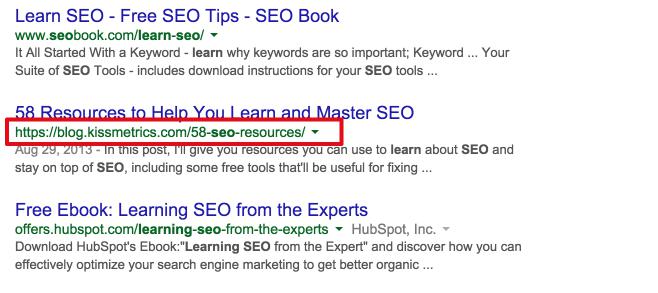
If you have the ability and/or resources, add encryption to your site. In addition to being a ranking signal, it is also a user signal. Sites with encryption are recognized in the SERPs with an “https://” preceding the URL, unlike non-secured sites.


This little change in the SERPs alerts conscientious users to the presence or absence of a security layer on a given site, which may in turn affect click-throughs, bounce rates, and dwell time.

2. Add Above-the-Fold Images or Videos With Full Optimization

We all know images and videos can improve a site’s ability to engage users. What we may not realize, however, is that such images can improve a site’s ranking in Image or Universal Search.
The click-through rates for no-image pages are, on average, lower than pages that contain images. Although the first position results gain higher CTRs (20% vs. 10%) for no-image pages, the tables turn in the third through tenth SERP positions. For these results, users show a preference for pages that contain images.
Here is research from Jim Yu in his discussion from Search Engine Land. The chart indicates CTRs for image vs. no-image SERP entries.

To make your images as SERP-supported as possible, you need to optimize them. Here are the most important features for optimization:
  • Make the size of the image appropriate to the necessary resolution. Get the file as small as possible to improve page load times.
  • Add alt text.
  • Title the image appropriately, using keywords if at all possible.
  • Use a good quality image. It’s for the users, remember.
  • Add supporting Schema for the image.
You can use videos, too, with similar results in the SERPs. The additional effort of adding above-the-fold images and video is that it improves SERP rankings while also adding value for the user. Value for the user means your site visitors will click through more frequently, bounce less, stay longer, and thereby improve your rankings.

3. Create an Image Sitemap

Every search engine professional understands the importance of an HTML sitemap and an XML sitemap. I’m suggesting that you create an image sitemap.
So, what’s an image sitemap? And how many sites even have one?
Not many sites have an image sitemap. That’s why we’re under the hood right now. This optimization will boost your rankings particularly in Google’s Image Search.
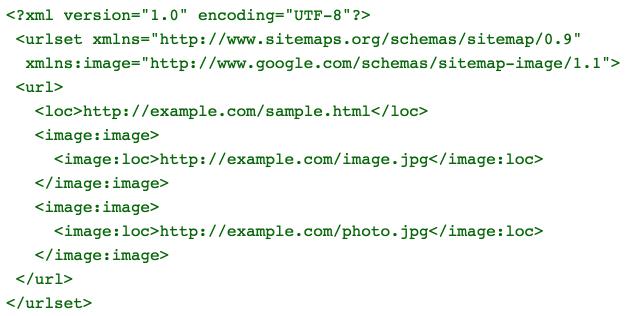
To create an image sitemap, simply add extra information about images on the page to your existing xml sitemap.
Here is Google’s example of a sitemap with image information:

You can add the following image tag definitions:
<image:image>
<image:loc>
<image:caption>
<image:geo_location>
<image:title>
<image:license>

If you want to gain additional image search traffic and ranking, this is a must-have optimization maneuver. Be sure to check out Google’s support article on the topic.

4. Regularly Review and Request Removals From Your Link Profile

Behind every site lurks a powerful and sometimes ominous force. It’s your link profile.
You have limited control over what sites link or don’t link to your site. You could become the victim of a negative SEO attack, or you could be rewarded by links from a high-authority government (.gov) or education (.edu) site.
But you do have some control. You should exercise this control in three ways:
  • Monitor your link profile. Every now and then, scan through the list of sites that are linking to you. This data is available in Google Webmaster Tools. You can also purchase services that will scan your link profile for possible risk.
  • Request low authority or spam sites remove their links to yours. A polite removal request is the best solution to spam links. Simply email the webmaster, informing them of the links and ask that they be removed.
  • Submit a disavow file. Regardless of the SEO brouhaha over the issue, Google has provided a tool that allows you to disavow any links that you deem undesirable.

5. Create Keyword-Specific URLs

Aren’t ranking for a specific keyword? Check your URLs.
Exact match domains (EMD) are an SEO spam technique of yesteryear, but there is no question that Google still considers the URL to be a significant indication of a page’s relevance, and therefore a ranking factor.
Notice how each of these sites, top-ranked domains for a competitive keyword, have URL pages that use the exact query.

If you are angling for a longtail keyword, I suggest creating a specific targeted page that uses the keyword string in the URL.

6. Use Your Target Keywords Across The Entire Site

One of the lesser-utilized SEO techniques is employing a target keyword throughout the site as a whole. Many SEOs believe (mistakenly) that they can rank for a given keyword by churning out a few blog articles surrounding the keyword. They target a keyword by developing content on one or two pages, but they neglect its presence on the rest of the site.
In reality, Google prefers to see an entire domain that supports the keyword and its semantic variations.

Here’s how you can check this:
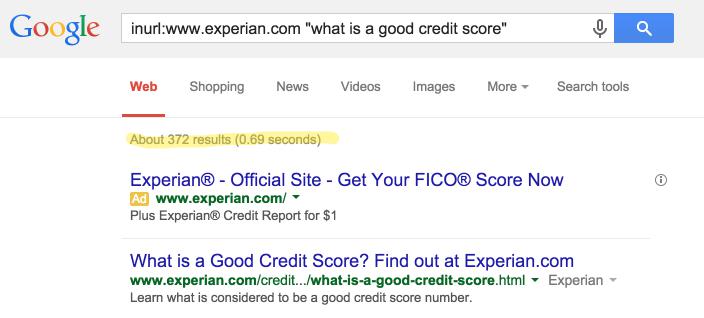
  • Do a Google search for inurl:domain plus the selected keyword in quotation marks.
  • Look at how many results Google provides.
  • Compare this to as many domains or competitors as would be helpful.
Let me show you an example. In the screenshot above, I showed you how the website CreditKarma.com is outranking Experian.com for the keyword “what is a good credit score.”
I recently analyzed the SERPs for this keyword, and found that the top organic result has the highest sitewide saturation for the given keyword. I tested several other semantic variations and found it to be consistently true. The site with the highest sitewide occurrence of a given keyword ranked higher.
Look at the comparison. Here’s CreditKarma.com, the top organic result for “what is a good credit score.”

Here is Experian.com, the second organic result for the same keyword.

CreditKarma.com has 3,500% more occurrences of the keyword than Experian. Even though CreditKarma’s domain authority, page authority, and domain wide link quantity are lower, they still rank higher for that keyword.

My informal survey doesn’t prove that top results will always be backed by the highest occurrence of a keyword throughout the site, but it does suggest it is an important factor in Google’s ranking system. Sites that contain semantic variations and/or keywords throughout have a higher chance of ranking in the SERPs for any given keyword in that semantic domain.

7. Optimize Your Brand’s Social Profiles

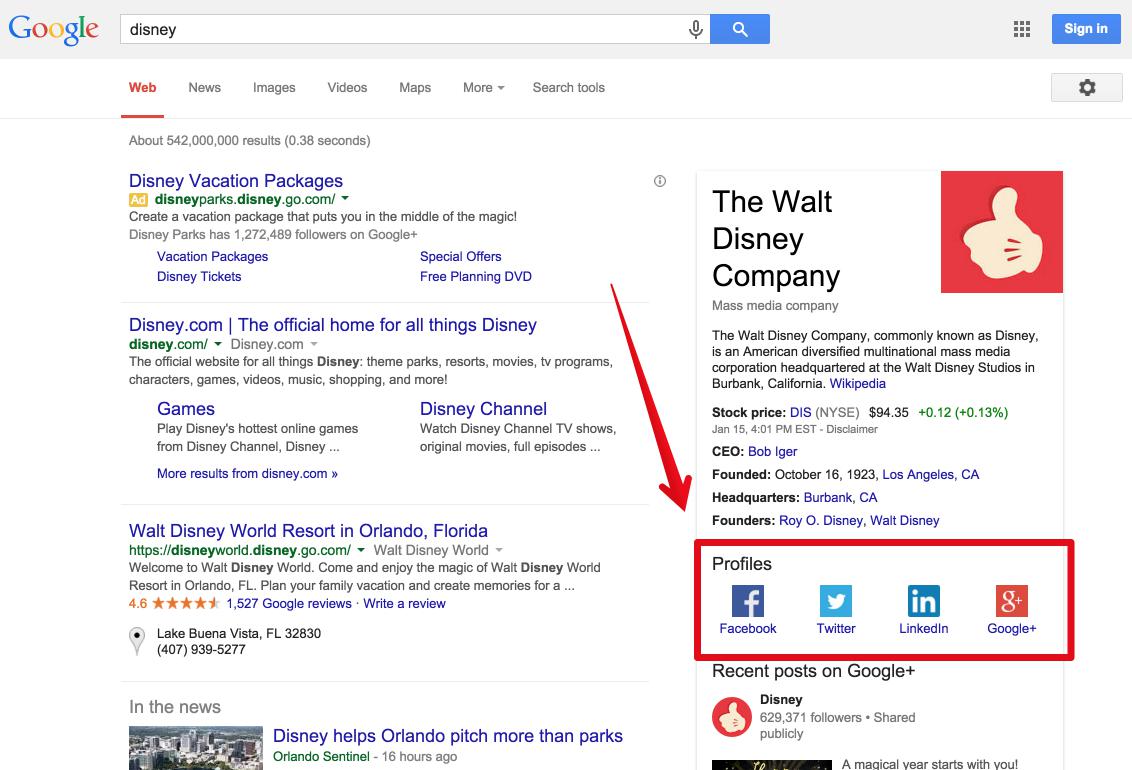
Google’s Knowledge Graph is a significant aspect of SEO that we can’t ignore. Google recently began displaying the social profiles for brands directly in the Knowledge Graph.
It’s not apparent how this will roll out for small to mid-sized businesses. Most of the results I’ve seen are for large corporate brands.
My sense is that Google will continue to refine KG settings to bring up a full array of information for most brands that have optimized social profiles. It’s worth giving some optimization effort to your social accounts.

8. Add Schema Everywhere

According to a study by Searchmetrics, Schema markup shows up in more than a third of all Google’s search results. With this huge SERP preference for Schema, you’d think that sites would be flocking to implement Schema snippets wherever they could.
Well, apparently not. A mere 0.3% of Internet domains are using Schema integration.
This definitely falls into an under-the-hood optimization technique. Learning schema isn’t that difficult, and it will certainly look familiar if you have any coding background or awareness of structured data.
Google has even given you some help with their Structured Data Markup Helper.

Conclusion

No matter where you are at on your SEO journey, there is always more to do. You can spend months optimizing, optimizing, optimizing, and never actually reaching a pinnacle of perfection. However, these under-the-hood optimization techniques will bring you closer to perfection than most sites.

Friday, September 27, 2013

Gain Unique Visitors for Your Business Website with SEM Services

One of the chief concerns we have as business website owners is how to gain unique visitors to our business websites. Without knowing how to get more traffic, how else will we get more leads, make more sales and continue to make money online?

There are a number of ways to get more traffic, so I’ve collected this list of my favorite traffic-generation techniques. I’ve tried to organize them into the following categories:
  • Content & Article Marketing
  • SEO & Search Engine Marketing
  • Video Marketing & Podcasting
  • Email Marketing & Syndication
  • Advertising & PPC
  • Public Relations & Spreading the Word
  • Social Media & Bookmarking

Content & Article Marketing

  1. Start a blog or add a blog to your website. Use WordPress. Tip: Don’t go with the free WordPress hosting offered by WordPress.com. It’s a watered-down version of WordPress you cannot optimize!
  1. Research your article keywords using the Google keyword tool. Target your blog posts and articles using these keywords. (Read How to Add Keywords to Your Website.) This will help your posts rank higher in the search results.
  1. Update your website or blog frequently. Three times each week is great. Daily is better.
  1. Write better headlines. Writing compelling headlines that convert into views is an art. Make sure you research your keywords and work them into your headline. Keep your headline congruent with the webpage it describes.
  1. Stay away from duplicating other posts and articles. Duplicate content is one of the big no-no’s according to Google and your site can be penalized or banned if you are engaging in this practice. Tip: If you’re hiring out your content writing, ensure the contractor knows their work needs to pass a plagiarism-detection tool like Copyscape.
  1. When considering content for your website or blog, there are two approaches to consider: timely hot topics or evergreen. Hot topics—like world events, emerging technology or celebrities—will offer you a chance to speak to something that is on everyone’s minds, however those topics often cool off and fade from relevance over time. Evergreen content—as the name suggests—is content that provides timeless value, based on principles that aren’t as likely to change with the public’s mood. A good piece of evergreen content can bring traffic steadily, year after year, and makes for a real asset to your website.
  1. Convert your blog articles to Adobe PDFs and offer them on Scribd.com.
  1. Offer to guest post at other highly-ranked websites. Include your URL in your resource box (your brief description about you and how to reach you for more information.)
  1. Comment on other blogs in your industry or niche. Make your comments thoughtful, courteous and use a keyword or two. Include the link back to your site.
  1. Similar to blog commenting, offer helpful solutions on Q&A sites like Yahoo Answers and Quora. Place the brief synopsis of your solution in answer to the question you’re addressing and post the link to the full article (already posted on your website) if they want to learn more.
  1. Join niche-related forums and offer advice, ask questions, etc. Include links to your websites in your forum signature.
  1. Offer a whitepaper that answers a common challenge for your audience. Collect email sign-ups in exchange. Deliver your whitepaper automatically using your confirmation autoresponder.
  1. Write an ebook. Include links to resources and to your own URL. Offer the ebook on your website.
  1. Place your new ebook into ebook directories for free or low-cost download.
  1. Convert your ebook into a PowerPoint presentation and post on SlideShare.
  1. Repackage your ebook for delivery on the Kindle, Nook and other tablet platforms. Then offer it for sale through Amazon, Barnes and Noble, etc.
  1. Add your blog posts to BlogCarnival.com. Host a blog carnival to bring exposure to others within your niche while building the value in your own site.
  1. Form a blog promotion network. Agree to retweet, mention, link or otherwise promote one member each week. (This requires 100% dedication from all members to make it work. If a member begins falling down on their commitment, they’re out.)
  1. Article marketing. Submit your pithy articles to sites like the following and remember to include keyword links leading back to your website. (Read Marketing Mastery Series: 5 Steps to Powerful Article Marketing.)
    1. Ezinearticles.com
    2. Ehow.com
    3. Hubpages.com
    4. Articlesbase.com
    5. Buzzle.com
    6. Associatedcontent.com (now Yahoo Voices)
    7. Suite101.com
  1. Build a quiz or self-test that shows people something about themselves. Entertaining, informative or both, bring value through self-discovery. Though I am certainly biased, here is an example I especially like: Branding 101: Discover Your Brand Archetype Quiz
  1. Create a Squidoo lens. This is a collection of original articles that link back to your site from your Squidoo page.
  1. Add a forum or discussion group software to your website. (Be warned: It takes time, dedication and love to grow a thriving community, but it can be well worth it.)
  1. Offer regular webinars and communicate the schedule and topics through your website and mailing lists. Tip: Record the seminars and add them to a members area on your website, or make them available 24/7, thereby bringing even more value to your site.
  1. Offer a free tool, template or software. When Hotmail was first introduced, each message carried a little signature at the bottom of each email that said “Get your free email at Hotmail”. The email system went viral, spreading naturally from inbox to inbox.
  1. Need help getting posts out regularly? Hire a ghost-writer through an outsourcing service like iWriter, oDesk, Elance, etc.
  1. Create a compelling infographic. When done well, infographics make even the driest material visually interesting, effectively grabbing and holding the reader’s attention long enough to deliver the message—and your URL.

SEO & Search Engine Marketing

  1. Use keyword-centric tags with your WordPress posts.
  1. In WordPress, make sure to leave trackbacks turned on. When you link to other site owners, an email will notify the blog owners of the new link and they will likely visit your site. They may even link back!
  1. Install the Google Sitemap XML plugin for WordPress. It automatically sends updates to Google and other search engines when you make a new post, helping your material get indexed more quickly. Don’t have a WordPress site? Use Ping-O-Matic to accomplish the same thing.
  1. Can’t use the Google Sitemap XML plugin for WordPress* to create your sitemap.xml or robots.txt files (used by Google and other search engines?) Use a sitemap generator like XML-Sitemaps.com.
  1. Two words: Google Authorship. Set it up and get your face to appear next to your posts in the Google search results. (Read Google Authorship: How to Get Your Picture into Google Search Results.)
  1. Install Google Analytics on your site and actually look at it once in a while. It doesn't even have to be Google Analytics, but you should be able to see how much traffic you’re receiving on a weekly basis and where your visitors are coming in from? How can you intelligently drive more traffic to your site if you don’t know what’s already working for you?
  1. Submit your website to search engines and search directories. Seems obvious, but most folks don’t know where to start. Here is a list of some of the top search sites:
    1. Google
    2. Bing
    3. Yahoo! Search
    4. AltaVista
    5. Excite
    6. Go.com
    7. HotBot
    8. Galaxy
    9. Lycos
    10. Gigablast
    11. Alexa Internet
  1. Use the linkdomain command in Google (ex. linkdomain:allseosolutions.com). While this only shows a subset of the links that lead into a domain, it can give you an idea about how your competitors are getting their rankings.
  1. Research popular misspellings of your company’s name and those of your competitors. Buy those domain names and forward them to your website.
  1. Find expired domain names in your niche that are still receiving traffic and buy them, directing them toward your site. For this, I recommend Expired Domains.
  1. Use a custom 404 page to help people find the information they are seeking from your website in the event it moves or otherwise becomes unavailable.
  1. Reciprocal linking campaigns with mid- to high-PR sites can offer a boost to your rankings and traffic. The best backlink is a one-way, dofollow link from a high PR site. Also, if you’re just getting started with your website and you have low PR, you had better have some great content, otherwise your opt-in rate with a reciprocal campaign is likely to be low.
  1. Join a web ring like WebRing. Advantage: Niche-related linking. Disadvantage: Uglies up your site. (Not as much of a disadvantage if you already have an ugly site. If that’s the case, jump in!)
  1. Pay a freelancer or company to generate obscene amounts of traffic for you. Just beware of the very real chance it could be a scam (Read How NOT to Drive Traffic Using Fiverr.)

Video Marketing & Podcasting

  1. Read or speak to your ebook contents in an audio post or series of audio posts and place on BlogTalkRadio or iTunes.
  1. Why only create audio posts of your ebook, blog post or web content? Create a video demonstrating the same information and post to YouTube and Vimeo. Include links back to your site in your video description and in video captions. Tip: you can do this either by presenting the material yourself, hiring someone to present it, or by creating a video with something like Animoto.

Email Marketing & Syndication

  1. Link your blog with your Aweber email marketing account. Take signups for your newsletter, ebook or other promotional/informational offers. This will grow your emailing list.
  1. Establish an RSS feed for your site. Add it to FeedBurner.com. (Well.. what was Feed-burner. Google gobbled them up.)
  1. Connect your RSS feed broadcasts to your Aweber email marketing service. This will deliver your blog posts in an e-newsletter format to your mailing list. Set the mailing list to weekly or whatever is appropriate for your posting frequency.
  1. Email your current and past clients regularly. Ask them about their interest in new products and services (segment your list accordingly.) Send letters of appreciation, short polls, tips, client spotlights and other relevant correspondence to stay at the front of their minds.
  1. In your enewsletter, don’t embed complete articles. Instead, display hook paragraphs with links back to the full articles on your own site. This also allows you to gauge what topics are most important to your readers.
  1. Don’t stop with only offering your whitepaper from your newsletter signup confirmation page. Include your Facebook, Twitter, Google+ profiles and links to other websites you own that complement.
  1. Syndicate your blog with Technorati.
  1. Include your website URL in your email signature. (It’s a good place to offer some of your social media URLs as well.)
  1. Run a solo ad, whereby you pay someone to market your offer to their list. Research your list owners carefully here; all is not as it may seem. (Proceed with caution. Read Solo Ads Advertising: Why Solo Ad Scams Suck.)
  1. Conduct an ad swap. You have a mailing list. Another marketer has their mailing list. Your offers align with each others’ mailing lists. The other marketer sends your offer to their list and you send their offer to yours. All things being equal, you both should see your opt-in lists expand. (Get started at Safe-Swaps.com.)
  1. Join venture with another marketer. Similar to a solo ad, you run your ad to their list, with the difference being they get a cut of the sales instead of taking a flat fee.

Advertising & PPC

  1. Run pay-per-click (PPC) ads using Facebook ads, Google Adwords or Bing Ads. Tip: Watch your ad performance carefully at first. You can lose a lot of money quickly if you don’t pay attention!
  1. Pay for banner ads on other websites. Target websites in your niche, preferably. This is a quick way to begin receiving qualified traffic.
  1. Banner exchange. Similar to reciprocal links, you agree to trade banner ads with other website owners. Aim for the same or complementary niches.
  1. Post free or paid ads on classified ad sites like Craigslist, ClassifiedAds.com, and Backpage.
  1. Begin an affiliate marketing program and spread the wealth! Pay others to promote you to their website visitors and mailing lists by giving them a cut. Make sure you can track referred traffic correctly before rolling this out.

Public Relations & Spreading the Word

  1. Offer to start an advice column for local media outlets. Have some example column posts and know your pitch well before approaching publishers. Finally, make sure the publisher’s audience matches your own.
  1. Along the same lines as an advice column, offer to write an editorial. This is akin to guest posting on someone else’s blog. By offering thoughtful insight into a common challenge or current event, you bring value to the publication and a spotlight to your own efforts.
  1. Write a compelling press release and post to free press release sites and local media outlets. Here is a short list of free and paid press release sites:
    1. Free-Press-Release.com
    2. Free-Press-Release-Center.info
    3. 24-7PressRelease.com
    4. 1888PressRelease.com
    5. PRBuzz.com
    6. PRCompass.com
    7. PRUrgent.com
    8. Express-Press-Release.net
    9. ClickPress.com
    10. PR9.net
    11. EcommWire.com
    12. PressMethod.com
    13. PRLog.org
    14. I-Newswire.com
    15. PressAbout.com
    16. NewswireToday.com
    17. PRLeap.com
    18. PR.com
    19. TheOpenPress.com
  1. Are your offline marketing materials supporting your online marketing efforts? You should have your URL on your business cards, flyers, brochures, letterhead; any and all stationary.
  1. Pay a high school or college student to place flyers with your offer and URL around town. Include college campuses, malls, grocery stores, houses, etc., so long as business proprietors are asked and so long as the location is congruent (or neutral) with your offer. These locations should be places where your target audience frequents. Tip: Not sure those flyers won’t end up in the trash? In today’s age of smart phones, pay for each image of the flyers as they’re placed.
  1. Drive your URL all around town. Brand your URL onto your license plate cover, bumper sticker, or have it added professionally to your vehicle’s rear window, tailgate, side, etc. Better if your car is unique in some way (and I’m not talking about that rust spot shaped like Elvis or the Virgin Mary.) Want to take this over the top? Invest in an eye-catching vehicle wrap.
  1. Buy a pair of sandals or boots and carve your URL into the bottom of them. Then go walk on wet sand or snow and give those who follow in your footsteps something to think about.
  1. Hold a contest. Winner gets a rave review on your site, a fun toy or gadget, cash.. whatever. The more compelling and niche-appropriate the prizes, the better. Announce the contest winners on your site.
  1. Join a local business group or association. Members often benefit from being listed in the member directory, complete with their website’s URL.
  1. Your business card should have your link on it, of course. Better, use the back of your business card to state a special offer, coupon code, promotion or other thrilling reason for them to visit your site. Now those networking mixers may actually bring some visits to your site instead of seeding your business cards at the bottom of trash bins all over town.
  1. Sponsor a league team. This might be softball, darts, roller derby, bowling—even chess. Consider the audience (the players and their families and fans) and your own interests when choosing your sponsorship opportunity.
  1. Get seen on television. This technique worked well for Dave Mayer of CleanBottle.com. Dressed in a gigantic bottle costume—complete with URL—Dave was first caught on video running along Tour de France bicyclists. The video went viral and CleanBottle’s orders exploded. He has since made this technique a cornerstone in his marketing strategy, though he’s occasionally roughed up by drunken cycling fans.
  1. Give a live talk, presentation, seminar or workshop. At the end of that event, you should be collecting a short survey to see how to improve the next event. Request email addresses from those who confirm they would like to opt into your mailing list.
  1. When folks were registering for that event, did they fill out a registration form? It better not have been printed! Any flyers or advertising for the event should point to your website where they’ll find more event details and the registration form.
  1. Give an interview. Regardless of the format, a recorded interview can offer you great exposure to your market and places you in the expert seat. As the interviewer for a list of questions ahead of time, or offer your own. Practice being at ease and ask for a copy of the interview for use in your own marketing efforts.
  1. Interview others. With every interview you conduct, the easier it will become for you to interview larger names in your industry. The larger the names, the larger the draw. Tip: Have your recorded interviews transcribed and offer them on your website. It’s a great way to generate fresh content!
  1. Offer to give a product review (whether positive or negative) or testimonial in exchange for a back-link.
  1. Send your product (for free) to other site owners for an online product review.
  1. Hand out promotional items with your URL on them. Don’t skimp here. Nice metal pens and USB drives tend to tend to stay with me for a very long time, even if they have a logo and URL emblazoned on them.
  1. Hold an online treasure hunt. Contestants compete to answer riddles and collect clues to win mind-boggling prizes. Of course, one of the clues (or maybe the treasure!?) will be on your website.
  1. Printed banners, billboards and skywriting. Enough said there. Better: Save yourself the printing costs. To retaliate against political sign thieves, Michigan digital marketing agency, Oneupweb projected a 30-foot video loop of a dancing Senator Obama onto the side of their building. The stunt made the evening news all over the country.
  1. Produce viral content. How? One idea is to make a legend come true. Athletic shoe manufacturer Hi-Tec, made a series of “reality” videos showing their new line of running shoes were so water-resistant, people were attempting to run on water—and they were succeeding.
  1. Tattoo (temporary or otherwise) your URL onto your body. Anything that important is sure to get looked up.
  1. Ask a celebrity to wear a t-shirt or dress with your URL printed on it.
  1. When attending a trade show, you and your team wear the same shirts, visibly labeled with your URL. Buttons and hats are another version of this.
  1. Create an award program. Establish the guidelines, the award graphics, press release templates, etc. Be discerning about how you select your candidates and make your announcement. Encourage the winner(s) to place the new badge on their website. Of course, it’s a link to the award summary on your own site.
  1. Promote a sale, introductory pricing, free trial or other enticing promotion to lead deal-conscious buyers to your website.

Social Media & Bookmarking

  1. Facebook. Share interesting or relevant posts, images and videos on your Facebook ‘fan page’. Every now and again, include a link to your own website.
  1. Facebook. Install the NetworkedBlogs Facebook app and connect your blog to Facebook. When you post to your blog, your post automatically shows in Facebook.
  1. Facebook. Link your Facebook account with your Twitter account so a post in Facebook automatically posts in Twitter. This lightens your need to log into both accounts and adds diversity to your Twitter posts, especially if you’re smart enough to automate some of them using…
  1. MarketMeSuite. Manage your social media streams and accounts from one place. Best: Create, schedule and upload your social media broadcasts a week, month, quarter or year at a time. Greatly reduces the social media marketing burden.
  1. Twitter. Display your Twitter feed on your website or blog. If you’re using your Facebook or Twitter account regularly, your tweets will display and serve to freshen your website. This encourages repeat visits and updates your website, keeping you fresh in Google’s search results.
  1. Twitter. Include your website’s link in your Twitter bio.
  1. Twitter. Tweet about your product, service or articles. Include links to your onsite material. Use has tags (#) to add your tweets to relevant topic streams.
  1. LinkedIn. Connect your WordPress blog with your LinkedIn account so your blog posts appear on your profile.
  1. LinkedIn. Include your URL in your profile.
  1. LinkedIn. Start a LinkedIn group. Best: Target your niche and mention your geographical location in the group’s description to build a more focused group.
  1. LinkedIn. Too busy to start your own LinkedIn group? Join other groups and add value to those communications. Often, those posts can be expanded to become full articles on your own website. Then offer the link to the group.
  1. Pinterest. Add interesting, non-copyrighted graphics to your web pages and blog posts then pin them to your Pinterest account.
  1. Create a profile in any of these popular social bookmarking sites. Include your URL in your profile.
    1. Digg.com
    2. StumbleUpon.com
    3. Delicious.com
    4. Fark.com
    5. Slashdot.org
    6. Newsvine.com
    7. DZone.com
    8. Diigo.com
    9. Tumblr.com
    10. Pinterest.com
    11. Reddit.com
  1. Using these popular social bookmarking sites, bookmark links of value, related to your niche. Your own website should be one of these bookmarks.
  1. Ask others to bookmark your site. Or bribe them. Either way.
  1. Make a “100 Ways to” list post and ask people to share if they found it helpful. Not quite that ambitious? Make the list “10 Ways to”, “3 Ways to”, “50 Ways to”—you get the idea.