Showing posts with label Search Engine Optimisation. Show all posts

Thursday, March 5, 2015

7-Under-Hood Optimization Techniques for Rocking SEO


Whether you’re an SEO at the top of your game, or a site owner looking to do more with your SEO, this article is for you.
 
Most SEO advice is pretty straightforward (and worn out): Optimize your title tags! Content is king! Use a sitemap!

I get all that. And that’s fine advice. And you should do it. But sometimes we need a little bit more — those under-the-hood optimizations that can move the needle even further for SEO. I’m about to give you seven of my secret weapons for doing just that.

Just so you don’t get your hopes up too high, I’m not providing any home run hacks that are going to boost you to the top of the SERPs by tomorrow morning. SEO doesn’t work that way. These seven techniques are reputable, slow-but-steady, and hard work.

But they do work.
SEO Tips - Dillip Kumar Barik - SEO Expert

1. Make Your Site Secure

Google has tipped its hand regarding one of their newest ranking factors: Site security.
In the summer of 2014, Google declared that HTTPS is now a ranking signal. Although its immediate impact on the search landscape is marginal, we can expect this signal to grow stronger as time goes on.

Security, with all its massive disruptions of late, is a big deal for users, and therefore for Google. We as SEOs need to understand this. Although we crave data — especially the data that gets snatched away from us (not provided) — we still need to respect the limits of privacy.
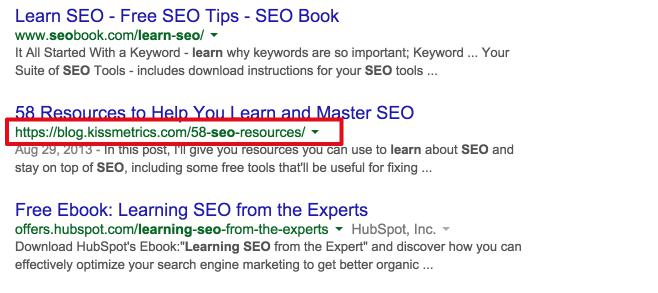
If you have the ability and/or resources, add encryption to your site. In addition to being a ranking signal, it is also a user signal. Sites with encryption are recognized in the SERPs with an “https://” preceding the URL, unlike non-secured sites.


This little change in the SERPs alerts conscientious users to the presence or absence of a security layer on a given site, which may in turn affect click-throughs, bounce rates, and dwell time.

2. Add Above-the-Fold Images or Videos With Full Optimization

We all know images and videos can improve a site’s ability to engage users. What we may not realize, however, is that such images can improve a site’s ranking in Image or Universal Search.
The click-through rates for no-image pages are, on average, lower than pages that contain images. Although the first position results gain higher CTRs (20% vs. 10%) for no-image pages, the tables turn in the third through tenth SERP positions. For these results, users show a preference for pages that contain images.
Here is research from Jim Yu in his discussion from Search Engine Land. The chart indicates CTRs for image vs. no-image SERP entries.

To make your images as SERP-supported as possible, you need to optimize them. Here are the most important features for optimization:
  • Make the size of the image appropriate to the necessary resolution. Get the file as small as possible to improve page load times.
  • Add alt text.
  • Title the image appropriately, using keywords if at all possible.
  • Use a good quality image. It’s for the users, remember.
  • Add supporting Schema for the image.
You can use videos, too, with similar results in the SERPs. The additional effort of adding above-the-fold images and video is that it improves SERP rankings while also adding value for the user. Value for the user means your site visitors will click through more frequently, bounce less, stay longer, and thereby improve your rankings.

3. Create an Image Sitemap

Every search engine professional understands the importance of an HTML sitemap and an XML sitemap. I’m suggesting that you create an image sitemap.
So, what’s an image sitemap? And how many sites even have one?
Not many sites have an image sitemap. That’s why we’re under the hood right now. This optimization will boost your rankings particularly in Google’s Image Search.
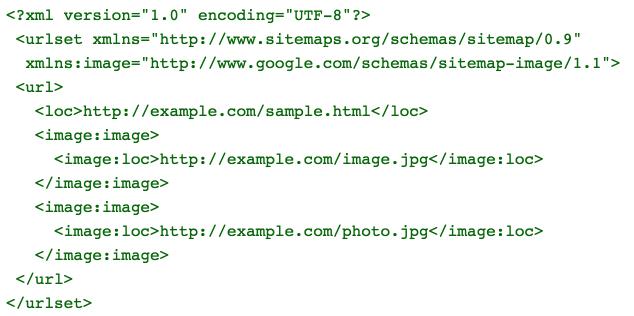
To create an image sitemap, simply add extra information about images on the page to your existing xml sitemap.
Here is Google’s example of a sitemap with image information:

You can add the following image tag definitions:
<image:image>
<image:loc>
<image:caption>
<image:geo_location>
<image:title>
<image:license>

If you want to gain additional image search traffic and ranking, this is a must-have optimization maneuver. Be sure to check out Google’s support article on the topic.

4. Regularly Review and Request Removals From Your Link Profile

Behind every site lurks a powerful and sometimes ominous force. It’s your link profile.
You have limited control over what sites link or don’t link to your site. You could become the victim of a negative SEO attack, or you could be rewarded by links from a high-authority government (.gov) or education (.edu) site.
But you do have some control. You should exercise this control in three ways:
  • Monitor your link profile. Every now and then, scan through the list of sites that are linking to you. This data is available in Google Webmaster Tools. You can also purchase services that will scan your link profile for possible risk.
  • Request low authority or spam sites remove their links to yours. A polite removal request is the best solution to spam links. Simply email the webmaster, informing them of the links and ask that they be removed.
  • Submit a disavow file. Regardless of the SEO brouhaha over the issue, Google has provided a tool that allows you to disavow any links that you deem undesirable.

5. Create Keyword-Specific URLs

Aren’t ranking for a specific keyword? Check your URLs.
Exact match domains (EMD) are an SEO spam technique of yesteryear, but there is no question that Google still considers the URL to be a significant indication of a page’s relevance, and therefore a ranking factor.
Notice how each of these sites, top-ranked domains for a competitive keyword, have URL pages that use the exact query.

If you are angling for a longtail keyword, I suggest creating a specific targeted page that uses the keyword string in the URL.

6. Use Your Target Keywords Across The Entire Site

One of the lesser-utilized SEO techniques is employing a target keyword throughout the site as a whole. Many SEOs believe (mistakenly) that they can rank for a given keyword by churning out a few blog articles surrounding the keyword. They target a keyword by developing content on one or two pages, but they neglect its presence on the rest of the site.
In reality, Google prefers to see an entire domain that supports the keyword and its semantic variations.

Here’s how you can check this:
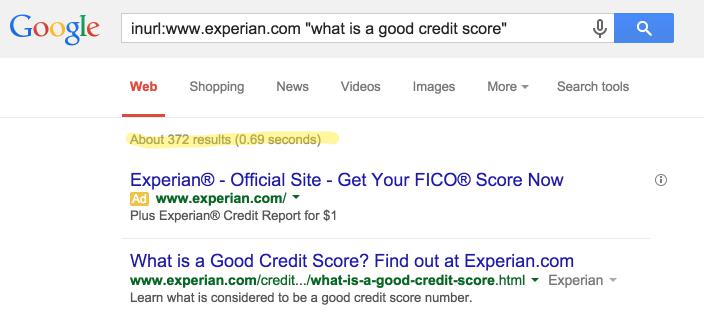
  • Do a Google search for inurl:domain plus the selected keyword in quotation marks.
  • Look at how many results Google provides.
  • Compare this to as many domains or competitors as would be helpful.
Let me show you an example. In the screenshot above, I showed you how the website CreditKarma.com is outranking Experian.com for the keyword “what is a good credit score.”
I recently analyzed the SERPs for this keyword, and found that the top organic result has the highest sitewide saturation for the given keyword. I tested several other semantic variations and found it to be consistently true. The site with the highest sitewide occurrence of a given keyword ranked higher.
Look at the comparison. Here’s CreditKarma.com, the top organic result for “what is a good credit score.”

Here is Experian.com, the second organic result for the same keyword.

CreditKarma.com has 3,500% more occurrences of the keyword than Experian. Even though CreditKarma’s domain authority, page authority, and domain wide link quantity are lower, they still rank higher for that keyword.

My informal survey doesn’t prove that top results will always be backed by the highest occurrence of a keyword throughout the site, but it does suggest it is an important factor in Google’s ranking system. Sites that contain semantic variations and/or keywords throughout have a higher chance of ranking in the SERPs for any given keyword in that semantic domain.

7. Optimize Your Brand’s Social Profiles

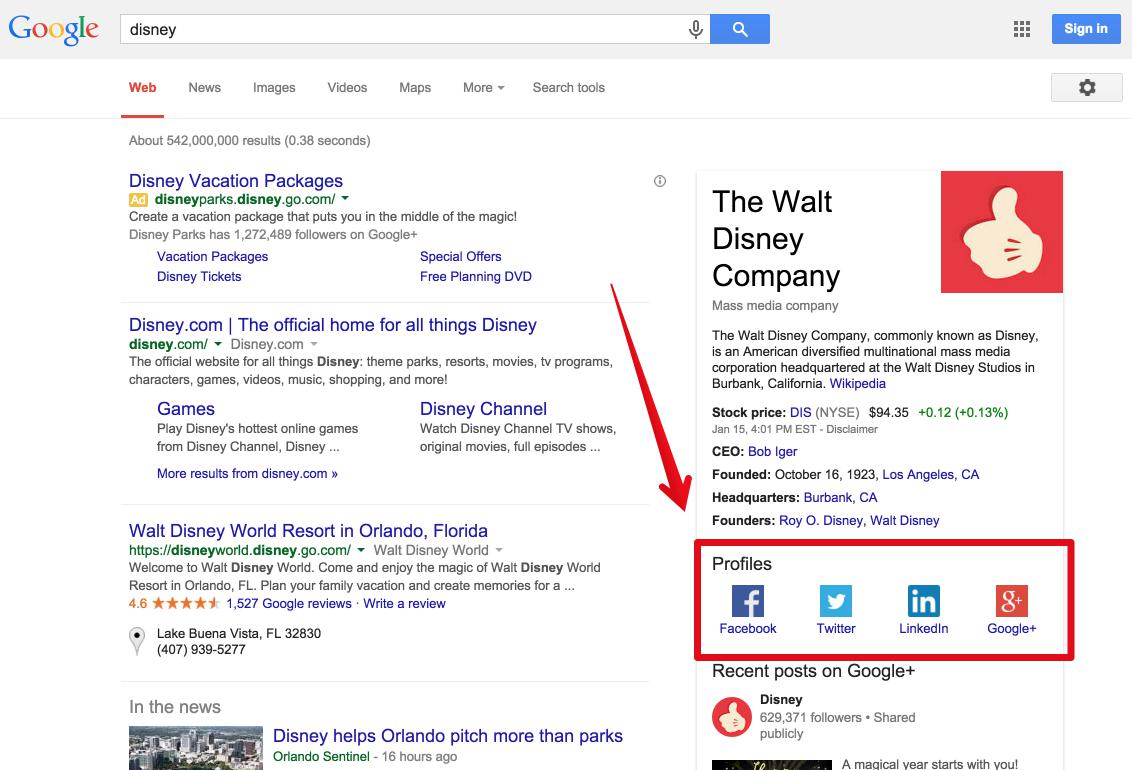
Google’s Knowledge Graph is a significant aspect of SEO that we can’t ignore. Google recently began displaying the social profiles for brands directly in the Knowledge Graph.
It’s not apparent how this will roll out for small to mid-sized businesses. Most of the results I’ve seen are for large corporate brands.
My sense is that Google will continue to refine KG settings to bring up a full array of information for most brands that have optimized social profiles. It’s worth giving some optimization effort to your social accounts.

8. Add Schema Everywhere

According to a study by Searchmetrics, Schema markup shows up in more than a third of all Google’s search results. With this huge SERP preference for Schema, you’d think that sites would be flocking to implement Schema snippets wherever they could.
Well, apparently not. A mere 0.3% of Internet domains are using Schema integration.
This definitely falls into an under-the-hood optimization technique. Learning schema isn’t that difficult, and it will certainly look familiar if you have any coding background or awareness of structured data.
Google has even given you some help with their Structured Data Markup Helper.

Conclusion

No matter where you are at on your SEO journey, there is always more to do. You can spend months optimizing, optimizing, optimizing, and never actually reaching a pinnacle of perfection. However, these under-the-hood optimization techniques will bring you closer to perfection than most sites.

Saturday, January 4, 2014

SEO Reviews of 2013 for Business Websites

HAPPY NEW YEAR - 2014
Ask anyone in the SEO space and they will be happy to confirm - often at length - that 2013 was a tumultuous year. Throughout the year, Google's SEO moves all had a singular aim: To force content providers to deliver clear and substantial value to searchers if they wanted to be rewarded with a high rank in search results. Nothing new there, at least in theory. What changed dramatically, however, was the search engine giant's ability rank sites using signals that forced providers to comply with the company's goals regarding value without being easy to manipulate. In other words, in 2013, Google made it much harder to game the system. Here's how:

Continued Panda and Penguin Roll-Outs

Google rolled-out its Panda update in 2011 in an effort to penalize "thin sites" that offered little value to searchers but lots of onscreen real estate to advertisers. The effect was dramatic if occasionally overreaching in scope. Penguin followed in 2012, targeting questionable linkbuilding tactics that artificially inflated a site's apparent influence. In the time since their initial releases, Google has continued to refine these algorithm tweaks, including at least three known Panda changes and two Penguin updates in 2013. Significantly, some of these changes were intended to help "legitimate" sites that unintentionally fell victim to Panda recover some of their lost status. Google continues to scrutinize linkbuilding tactics, including penalizing practices in 2013 that originally fell outside of Penguin.

"Not Revealed" Keywords

Traditionally, SEOs could analyze Google Keyword information to see how searchers were arriving at their pages and spot optimization opportunities. In 2013, Google took most of that data away in the name of protecting searchers' privacy, replacing what had been some of the most useful information provided in its suite of analytics tools with the dreaded phrase "Not provided."

While some information is still available through Google's Webmaster Tools, SEOs are still largely in the dark relative to the keyword information they had at hand in 2013. The two choices available to SEOs seemed to be make use of keyword information available elsewhere (for example, through Bing) or choose to focus on providing robust content that would hopefully incorporate many organic keywords.

Google Author Rank

It's no surprise that an author's name and reputation can contribute an air of expertise to the content she writes. Unfortunately (for searchers), until 2013, there was no solid way to calculate the impact of this incredibly important social signal in a search algorithm. As with so many other challenges, Google found a way around that and Author Rank was born.

By verifying code snippets on a content page against information in the creator's Google+ page, Google is now able to reasonably assure searchers that a piece content was written by a known and respected "name." Additionally, Google can now assign a value, known as Author Rank, to the apparent influence connected to that name. The upshot is simple: SEOs whose properties can offer content written by well-regarded creators stand to win big in this arena.

Hummingbird Update

In September 2013, Google announced that it had essentially replaced its old algorithm. The updated formula for parsing search requests and sorting results was named Hummingbird, and it promised to allow more natural search queries as well as provide more precise results, serving the exact page a user is likely to need within a relevant website. For example, searchers could now literally as Google a question instead of typing a string of keywords. The algorithm supposedly also understands queries more contextually - for example, providing answers relevant to Kansas City instead of New York if you happen to be searching from within Kansas City. While this is a new algorithm, it still incorporates changes related to quality that arrived under previous updates. Hummingbird makes optimizing content for locality and at the page level extremely important. It does not change any expectations about content quality.

What to Expect in 2014

Clearly, optimizing content for mobile and local search will be important in 2014, but the real story remains content quality. Since Google is forcing content providers to think strategically instead of tactically regarding their content, it makes sense for SEOs to take a moment to think strategically about Google as a search provider. While its executives in Mountain View earn their salaries in large part by delivering value to advertisers, they can only do that by maintaining their position as a trusted brand for end-users. The best way maintain that trust is simply to deliver high quality results to searchers. It will always be important for SEOs to keep feelers out for tactical approaches to optimization that can be exploited for quick gains, but the best long-term strategic approach to succeeding with Google in 2014 - and beyond - will be to deliver well structured, easily parsed, and valuable content to their target audiences. If that content is good enough to encourage social sharing, thus circumventing the need for discovery on a search engine to begin with, well, so much the better.

Thursday, November 21, 2013

Latest SEO Tips for Google Updates

Google left the door wide open and people took advantage. This led to great rankings, traffic and, more importantly, money in the bank. People started to rely on the majority, if not all traffic coming from Google and then the rug was pulled from under their feet. This kicked off an almighty struggle with the King of Search, but I’m here to tell you today that it doesn’t have to be a fight. There is another way.

Stop Building Dirty Links

If you’re going to get back into Google’s good books, you need to cease using dodgy link building tactics full stop.
This isn’t one of those situations where you can be half in, half out – you need to move away from dodgy links completely. Stop Now.

And a word to the wise: dodgy links with generic anchors can only work for so long. Eventually Google will catch you (if they haven’t already). Then, say goodbye to Google sending you any traffic.

Get Rid of Legacy Links that Don’t Fit with Google’s Guidelines

If you have been building nasty links in the past, you need to get rid of them, or at least try to.
It’s a fact: you can’t get rid of them all, but the consequences of not doing this could lead to an algorithmic penalty or even a manual penalty.

You’ll know about a manual penalty in your Google Webmaster Tools account. You will usually see an unnatural links warning message.

If you’ve got an algorithmic penalty, you’ll only notice this when you check your analytics and see your traffic drop through the floor.

You can get a manual penalty (or manual spam action) revoked by showing Google the lengths you have gone to in order to try and remove the links. You’ll usually get a message back from Google within 1-2 weeks.

If you have an algorithmic penalty, you can go through your links, highlight the nasty domains that are linking to you and disavow them, but ultimately you may have to wait until the next Penguin refresh to see whether your rankings come back.

Dance to the Beat of Google’s Drum

Google has a set of quality guidelines that they recommend to webmasters and, when you think about it, it’s all really straightforward stuff. It includes avoiding nasty things like cloaking, hidden text, doorway pages and all that blackhat stuff.

It also involves making your pages for users, adding value and creating unique content.

This isn’t groundbreaking, or even rocket science, and remember that these guidelines are updated as Google continues to evolve along with their search algorithm.

Most importantly, though, when these guidelines are updated, don’t jump to conclusions and don’t make assumptions. This goes for algorithm updates, too.

A lot of people within the industry are being too quick to make up their minds without looking at the data, and these assumptions can often cause more problems than they solve.

Think about the Future and the Big Picture

One of the big mistakes that a lot of people are making is that what works now will carry on working forever.

Before Google’s Penguin update in April 2012, a lot of people thought that blasting nasty links at websites was going to continue working.

Those that looked at the bigger picture, however, could see that those practices were at best a calculated risk, and that Google would eventually bring the boom down and take action on manipulative link building tactics.

Content is what it’s all about, as it has been for a while (that and user experience). While there are a lot of people that struggle to get traction, there are tactics you can use that will get you results.

Don’t Put All of Your Eggs in One Basket

You can understand the temptation, knowing that some websites are getting 100,000′s of visitors a month from Google. While I don’t think you should give up working towards those insane levels of traffic, you can’t just rely on one tactic.

In business, you always need a contingency plan for anything that could go wrong, so you need to be sure to focus on other ways of generating traffic.

Just look at some of the top business blogs. Sure, they may be getting a lot of traffic from organic search, but there are a lot more things you can try:
  • Social media
  • Contributing to other blogs
  • Doing interviews
  • Link building (the white hat way)
I’ve found that the best way to figure this ‘traffic generation’ thing out is to not just look for a list of tactics, but look at how people are using them in case studies.

Summary :-

I understand that there may be some of you reading this post who don’t have any love for Google generally, and don’t like following anything Google says.

I understand why – Google does have a lot of power (too much), and its algorithm updates have the power to shake entire economies.

The truth about the ‘user experience’ thing is that, while Google’s ultimate aim (at a guess) is to stop users from going over to Bing and so protect its advertising revenue… Google is actually on to something.
Where are all those sites that didn’t give a damn about the user experience now?
Nowhere to be seen.

Where are all those sites that thought about user experience and building a community before anything else?
They’re still here and a lot of them are leaders in their field.

So, whether you like it or not, it’s time to get on board with the ‘user experience’ thing.
What’s your take on the current state of search?

Saturday, April 6, 2013

Website Promotion Tips with Search Engine Friendly Techniques

SEO or search engine optimization of websites is the buzzword of the Internet. You can’t survive online without promoting your website. Understanding its concepts is easy but practicing for to your business growth is little difficult and need patience.

The success of your website online largely depends on the level of visibility it enjoys. This will only happen with a robust and effective website search engine optimization program. There are many ways to accomplish this end objective.

Keywords

Keywords are those magic words which attract your site to search engines. These also guarantee good page rankings. Since these are an important component of website search engine optimization you need to ensure each page of your site has a good array of strategic keywords evenly spread out. Many experts conduct intensive keyword research programs which help to analyze which keywords are the most popular and can fetch you greater visibility online.

Copywriting

The content on your website not only needs to be interesting and related to the site theme, it also needs to be search engine friendly. Website search engine optimization relies on effective and search engine friendly copywriting to attract better page ranking online. Your website copy needs to exude professionalism while also ensuring that keywords are generously sprinkled in the articles.

Meta Tags and Title

The title of your web pages is what will attract search engines to your site. That’s why it’s important that not only is the title interesting and catchy, but it also has relevant keywords in it. That way the search engine robots that crawl sites get to access your site instantly. Website search engine optimization is all about being accessible to search engines. Even your site Meta tags need to have these keywords well placed.

Knowing your Competition

Many website search engine optimization service providers will do an in-depth competitive analysis. This is because in order to stay ahead in the competition you need to know where you stand. That’s why it helps to find out which keywords are currently being used by your immediate competition. It will also enable you to learn from their mistakes and fine tune your site optimization efforts better.

Manual Submission for Link Building

Many providers will also manually submit your site to search engines online. Through this they are able to effectively and actively propagate your website to the web. Website search engine optimization methods involve fine tuning of content, building more links as well as involving tools like PPC etc. to drive more traffic.

Link Density

The page rank and popularity of your site will depend on the number of links as well as the kind and quality of links on your site. In fact most of the popular search engines of today distinguish successful and not so successful sites by the density of links on their sites. Therefore as part of your website search engine optimization program you need to ensure active procurement of associated links to your site. By improving the link density you get to improve the relative placement of your site in search engine results.

Collecting High Quality Links

It isn’t just sufficient to have a large volume of links to your site. It’s also equally important in website search engine optimization to have good quality links from reliable partners. Therefore, it is essential to test the strength and effectiveness of each link before incorporating it into your site.

Monday, March 18, 2013

Latest Study on Google Algorithms with SEO Trends

In order to avoid few myths about actual SEO trends and focusing solely on Google’s algorithms, the study has uncovered critical data for business owners looking to maximize their placement on Google search engine results pages (SERPs).

To drill down into the current landscape, the study randomly selected 100 key phrases ranging from two to six words. Next, they analyzed only the first five results in each Google search, creating a test pool of 500 different web pages from which to gather data. Google Adwords ads, images, shopping sets and news site sets were eliminated from the analyzed test cases, ensuring actual web pages alone were studied.

Keywords, Title Tags and Content Length:

The study analyzed factors such as the full URL, title tags, headlines, subheadings, word count for body text, images, videos and, of course, backlinks. Only 50% of the top five pages featured the key phrase in their title tag, and only 43% had it in their header. It turns out that, despite the advice of many top SEO firms, less is actually more. Key phrases are obviously critical to set the tone and inform search engines of your content’s theme, but overuse of key phrases does not gain sites any additional ranking mojo. The study states, “If you’re going to include exact key phrases, you really only need to include them one time.” The first main takeaway is therefore a straightforward one: don’t over-optimize.

There’s also a heavy emphasis on the importance of including your key phrase in either your title or headline (or both, but that’s not absolutely necessary). Knowing that overuse of key words doesn’t garner higher rankings, remember that using the same words repeatedly makes for awkward reading, and is a surefire way to turn off visitors. The message here is simple: highlight your key words, but write your content in a way that sounds natural. While a search engine might not appreciate copy that flows well, your visitors will.

How much you write also seems to play a role. Web pages ranking in the #1 spot often had a much higher word count than those in the #5 spot, by about 120 words. The study shows that an excellent word count for your body text is about 900. Bear in mind that this particular statistic showed a vast amount of variety. Overall, however, a higher word count does seem to positively impact your SERP rankings.

Images and Video:

Does a picture say a thousand words to Google? The answer: not really. Of the 500 ranking pages, the average number of images was seven – but many featured none at all. Videos fared even worse, with a less than one per page average. The findings showed almost no connection to images or rich media in the Google algorithm. Whether examining the #1 or #5 ranked page, the findings were consistent.
Backlinks and Home Pages vs. Internal Pages:

Many business owners struggle with obtaining dozens and dozens of qualified backlinks, but is all this networking still super crucial to Google rankings? At first glance, the study seems to indicate the answer is no. Many of the top pages had zero backlinks. But before you abandon all outreach efforts, know that further inspection showed that high ranking pages without backlinks actually had significant links to the domain’s homepage. Overall, this is great news for business owners. It means that you don’t need to have significant links across the web for all the major pages on your site. As long as you have a nice flow of backlinks to even one core page, your entire site will reap the benefits. But you can’t be lazy in this aspect of site building – backlinks are still king.

Although the stats were all over the map, it’s clear a significant number of backlinks are needed for a stellar ranking. On average, the #1 ranking site for each key phrase had 662 backlinks, whereas the #5 page for each had just 142. That means the Google’s top pages have five times more backlinks than those just a few results down. When it comes to backlinks, as with actual word count, more is still more.

Another surprising reveal from the study is that only 12% of all top ranking pages were homepages. This tells us there is truly an equal playing field for internal pages to rank well too – another burst of good news if perhaps your homepage isn’t your strongest landing page. Google doesn’t seem to mind.

The Importance of the Social Scene:

As expected, one should never underestimate the power of the social stratosphere. Of the pages studied, the highest ranking performers were tweeted on average 371 times. Facebook stats for the top dogs showed an average of 1512 Facebook likes and 988 shares. These are fairly epic numbers. As with backlinks, the difference between the #1 and #5 ranking pages showed a vast gap in the level of sharing. While it’s unclear if Google truly tracks social signals in their algorithms, it is abundantly clear that more social sharing means a higher likelihood of an awesome ranking.

While this study is not enough to bank your business on, they did put significant time and thought into the process, and produced some actual data revealing valuable trends and information. It’s critical to analyze cold hard data over the speculation of SEO firms, no matter how brilliant or instinctive their executives may be. Google’s algorithms are dynamic and mysterious, but seeing raw facts helps to better shape your successful ranking strategy. The takeaways here are pretty easy to ascertain: write valuable and keyword rich copy without going overboard, use images as appropriate but without pressure to meet any quota, and continue your efforts to gain credible links messages. Lastly, it’s obvious social networking is completely integral to a respectable ranking, so don’t skimp on your social strategy. Most of all, remember that SEO is an ever-changing landscape, so keep your eye out for more factual studies, and never get too comfortable that you know all there is to know.

Friday, October 12, 2012

Local Business Website Visitors Generating Tips

Every business faces strong challenges for local marketing and making web presence in its locality. Especially for small businesses generating local traffic is a complicated mission. Local customers provide the support that small businesses need to keep going, which makes optimizing your website for local search engine rankings even more important.

1). Find Reliable Hosting Near your Region:
Before you start any website project, you need a reliable place to host it. Look for a hosting service that provides enough bandwidth to support site pages, the types of media you’re planning to use and the amount of traffic you’re expecting to get. Without this, your site is likely to go down without warning. Downtime means disappointed customers and losses in sales.


2). Optimize for Local Business Keywords:
You already know how important keywords are for SEO, but you have to put effort into ranking for local keywords. For that you may Hire SEO Experts, who will take care of your website SEO campaign. Customers in your area are likely to use some kind of location-based term when searching for local products and services. If you’re a cookie company in Vermont, for example, don’t just optimize for “fresh cookies.” Try phrases such as “fresh cookies in Vermont” or “homemade cookies in Montpelier.” Incorporate these phrases into your website text, page titles and meta description tags in a way that flows naturally.


3). Include Local Address:
Putting your business address and contact information somewhere prominent on your front page makes it easy for customers to get in touch with you. Putting it on all of your pages alerts search engines to where you are and can help deliver more useful results in location-based searches. While you’re at it, why not embed a map as well? That way, customers can see exactly where your business is in relation to their own locations and find you more easily.


4). Get Listed on Local Directories:
There are many online directories that allow you to list your business along with contact information, photos and sometimes even videos. Getting your business on Google Places, Yahoo Local, Yelp, Superpages and other local search directories verifies that you’re in business and lets you update your listings whenever necessary. Being listed can also give your search rankings a boost over and above the competition.


5). Linking Local Websites:
A good network of relevant backlinks helps to show search engines that your site is of high quality and worth crawling. Local backlinks from sources such as other businesses, local resource listings and pages for special community events give your company local credibility. Seek out a variety of links that will help establish your identity. When others link to you, make sure that they do so in a way that incorporates your highest-performing local keywords.


6). Use Social Media:
People love to share where they’ve been and what they liked about it, and this is where social media comes in handy for small businesses. On Facebook, for example, business Pages put location, hours and contact information right near the top. When users “like” your page, the action shows up in their news feeds for their networks to see. You can also target important updates to specific locations, so it’s easy to let followers in your community know about limited-time sales, special offers and other location-specific events.


7). Gather User Reviews:
On many search directories, customers can leave reviews of their favorite businesses. You won’t have any direct control over whether these reviews are positive or negative, but the feedback you get will help you make business decisions to better serve your customers in the future. Some sites allow you to reply to user reviews, giving you a chance to ask questions, resolve problems and establish yourself as a reliable presence in the community.


Making sure that your business website is designed to draw local traffic is worth the necessary time and effort. Local traffic not only brings in customers from around the community; it also boosts your reputation in nearby areas by generating Internet buzz and increasing consumer feedback. Local traffic has the potential to boost sales and raise brand awareness in the areas that are most important to your marketing efforts.

Wednesday, July 25, 2012

Make Website more User Friendly Instead of Emphasizing on Backlinks

Making a website more user-friendly with eye-catching look and feel, proper navigation and adequate information with unique quality content is much more important than emphasizing on collecting backlinks. Although link building is a very essential process of search engine ranking algorithm considered by Google; the importance of making a website more visitors oriented can never be underestimated. There are some factors like informative and engaging content, unique quality services and attractive design which able to drive unique traffic for your website.

As the owner of a website you will obviously try hard to create a very good reputation not only for yourself but also for your organization. So it is obvious for people to believe that poor or degraded quality incoming links will lead the particular website is not good.
Also it does not seem to belong to any good neighborhoods and over time this will going to affect your websites ranking and bring it down considerably.

Some other factors which relate to this are the attractive design and appeal of the website, the arrangement and spacing of words, informative content in a particular webpage. Also the navigation and functionality of links present in different web pages or how easily a user is able to identify his answer to a particular query is also as significant.

Links coming from lower quality and free for all websites should not be a matter of concern for you as this is not the only aspect, which Google sees as a condition for judging quality of your website. If your website is attractive, user friendly and of a good structure, then you will definitely score better than others in this respect. A regularly maintained and well constructed and informative website is always appreciated by any user more than anything else.

It is always possible for any owner to not only have a website of high quality but also have back links of good quality. This is always possible in this ideal world. There always remains a concern that a user’s perception about a particular website might get affected or be negative if the user comes to know about the website from a bunch of links, which are actually full of spam.

Now it is advisable to get detached from these links coming from spammy websites. This can only be done if the poor quality links are actually manageable. You should give a try at contacting the owner of the concerned website and personally asking them to remove links pointing your website. It is however to be kept in mind that Google does not perform any such things on your behalf, also they don’t perform content management of any sort, they only perform indexing of any content found over the net.

You should not worry on this for too long because of uncooperative owner. Rather than it will be better to focus and concentrate on things which are under your direct control because as a webmaster you can hardly control links to a website. So it is better to go for website reviews from forums of webmaster, manage your content well conduct usability studies which will help you improve ranking and indexing to a great extent. Also you can take a leaf out from your competitors into what strategy they are employing and why you would visit their website more.

Finally try and remember that links of lower quality will hardly impact you in the long run but factors under your control like a website’s view, organization, and usability will always affect it positively.

Wednesday, July 4, 2012

Top 10 SEO and Link Building Mistakes

Mistake 1 – Neglecting On-page Optimization:
I think more people are beginning to understand the importance of on-page optimization when it comes to ranking their web pages. With so much focus on keywords and link building though, often I see webmasters focusing too heavily on the “off page” stuff, without realizing what they do “on” their website is just as important. Proper internal linking, keyword density, LSI, image text, no follow tags, just to name a few, are also very important to search engines. There are free plugins available to help you with a lot of this stuff, so do your due diligence and implement whatever strategies need be.

Mistake 2 – Freaking Out When Rankings Plummet:

dillipkumarbarik.blogspot.com
SEO Tips - SEO Services India
Go onto any internet marketing forum and you will see this every single time. People are literally freaking out when they see their rankings drop. Most often this is due to a thing we call the Google dance. All new websites go through what is called a “honeymoon” period where their websites rank very well at the beginning, but after a couple of weeks they settle in the search results… usually at a much lower ranking, again, this is natural. 

If your websites have age and have dropped in rankings, you may need to work harder to get your position back. You may need to update your content more often, you may need to build more backlinks or you may need to re-evaluate your SEO strategy. Google’s algorithm is changing frequently these days so it’s important to find out what they want, and go give it to them. The days of gaming the system through black-hat techniques is coming to an end.

Mistake 3 – Writing for the Search Engines:

This is one of the biggest mistakes I see being made day in and day out. Webmasters are writing terrible content that is keyword stuffed for the bots. While it is important to have a certain keyword structure within your content so that the search engines know what your content is about, it is very important that you write for the human visitor FIRST. Some say for every 100 words, you should have your keyword inserted once. So, if you have a 1000 word post, you will put your target keyword into the article 10 times. I think this is a good rule of thumb to follow.
Make sure that when you read your article out loud, that it sounds natural and not robotic like. Always remember if inserting your keyword too often into your post takes away from the natural flow of the article itself… then do not do it. Google is clamping down really hard on over optimized websites. Always write with your target human visitor in mind.

Mistake 4 – Building Thousands of Low Quality Links:

I cannot believe this is still going on with all of the changes Google has made. There are still idiots out there blasting thousands of links to their money sites in the hope of climbing the SERPs. I was offered 10,000 free links the other day to my website and I told the person to take a run and jump. Those kinds of links are going to have an adverse affect on your ranking. It has to be bloody obvious that Google hates these kinds of links and, if your business is solely dependent on this kind of strategy, then you are playing the fools game. One solid PR5 backlink from a relevant site will be far more powerful than a million links from low quality, non-relevant crappy sites.

Mistake 5 – Not Being Aware of No-follow and Do-follow Links:

When I first started out in this industry I had no idea about these two terms. I built a lot of links to one of my first websites and it was taking forever to gain traction in the SERPs. After a bit of investigating I found that almost all of my backlinks were placed on web pages that were no-follow. Needless to say, those links were just not as effective for rankings as the do-follow links I needed. I’m not saying that no-follow links don’t have their place. In fact, it’s important to have diversity in your linking structure, but most of your links must be do-follow to gain maximum benefit.

Mistake 6 – Expecting Quick Results:

I know when I first started online, I expected to make a lot of money fairly quickly. Boy was I brought back down to earth over the next 6 – 12 months. I almost threw in the towel on more than one occasion because it became very frustrating, trying to make this thing work for me. I built website after website, built a hell of a lot of backlinks, wrote hundreds of articles and participated in all the social media sites, but, it just wasn’t happening as quick as I was led to believe it would.

I realized later on that NOBODY makes money online quickly. They all have to put in the hard work. Your progress can be accelerated if you are willing to spend some cash and outsource a lot of the grunt work, but in my experience, expecting to make money very quickly online usually works against you in the long run. The failure rate is so high because people find this out the hard way.

Mistake 7 – Not Being Consistent:

If you are serious about making money online then you must be consistent every single day with your efforts. This can be the biggest stumbling block for many. It almost was for me. You can work very hard to get top search engine rankings for a particular keyword, but even after the fact, you still have to be consistent with your efforts, else your competitors will overtake you fairly quickly. Everything you do in regards to your online business has got to be consistent. You must put the work in everyday if you are to see the results you’re after.

Mistake 8 – Not Diversifying Your Link Building:

To make your link building look natural, it’s important to gain backlinks from many different sources. Backlinks from just article directories and no other places for example, do not look natural and can hurt your rankings. You need to get links from social media sites, article directories, blogs, blog comments, forums etc. Diversifying your link building looks natural and can put you ahead of your competitors in the search results. A naturally good website will get links from many places, not just one or two.

Mistake 9 – Not Getting High Page Rank Links:

Every day you are back linking, you should be looking to place your links onto high PR websites. Google values links placed on higher PR websites exponentially higher than low PR websites. These links are obviously harder to get, but that is exactly the point. The harder it is to get a link, the more valuable that link is likely to be. This is why all these push button software programs that can get you thousands of links are crap. You will not come across a software program that gets you high quality backlinks with the push of a button. Anyone who tells you differently is either lying or a moron.

Mistake 10 – Not Updating Your Content Often Enough:

Obviously the more high quality backlinks pointing to your content, the higher your search engine rankings will be. You will then get lots of free traffic. While this is the basic approach that everybody uses to climb the SERPs, there is another way. Google loves websites that update often. I have built a website that has very few backlinks pointing to it that gets me 10,000 visitors a month from the search engines. The reason for this is because I regularly update my content.

I see webmasters spending so much time building backlinks to their websites every day. This is important of course, but if they actually spent an hour each day writing a new post for their website, they would get far more traffic further down the line. I know this works because I have used this approach many times in the past. With all the Panda’s and Penguins about these days, I have found my websites gain higher search rankings, simply because I always have fresh content on my sites. If you do not want to write every day, then write at least 3 times a week – it helps.

Tuesday, May 8, 2012

Useful Tips for Small Business Owners

Leadership is important in your business whether you have 1 employee or over 50 employees. Hopefully, these tips will help you on how to be a good leader for your business if you are not already. All of these tips can't be done just once, you need to practice them daily or weekly or monthly. Repetition of each task will get you in a routine and make your business run smoother. Being a small business owner can be rewarding in many ways but can be frustrating as well.


1). Work on your Business, Not in It

This actually sounds pretty ridiculous because you should know how to do the majority of aspects in your business. This means that you need to focus on your future plan and how your business is going to move forward and grow. You are the mastermind of starting your business. You can't stop thinking and growing just because you are now open.

Sometimes it is a lot easier to focus on the day-to-day operations of your business because I am sure you know it best, but you are not helping your business this way. Why do you hire staff if you are just going to let them sit on their backsides and play games on their phones all day! You need to work on your five and ten-year plans and what steps you need to do to get there.

By working your business and not in it, your business will eventually be able to run itself. As an owner, you need to be able to take a vacation or if you need to leave for an emergency and not have to worry about whether the business will run itself or fall apart without you.

You should be able to leave at any given time and your business should sail smooth. It is very gratifying as an owner to not worry about your business when you are not around. It means you have done your job and have led your employees to be efficient and independent thinkers.

2). Have a Plan and Work It

Now that you know what your future goals are going to be for your business, don't forget about the actual business. I know I said don't focus on the day to day operations but it is important to find out how each department in your business is doing. Check on the inventory and assess your business on a regular basis.

Work this into your short-term goals. Don't let the business slip out from under your fingers because you were looking at your long-term goals. At the same though, don't micromanage every little detail. Practice your plan and make it work.

3). Find a Mentor

Find someone you trust, is patient and who has success in a similar business as yours. You need to be able to bounce off ideas or call them with questions. I'm glad my mentor was patient. There would be times when I would call my mentor five or more times a day and even at all hours of the night.

I wouldn't go this far if I was you, but I had a great relationship with mine. After getting scolded for waking her up, she was more than helpful. The trick to finding a good mentor is finding one that wants you to succeed. This makes all the difference in the world.

4). Keep an Eye on the Future

We briefly talked about long-term goals. I always told myself to look for the light at the end of the tunnel during hard days or think about that pot of gold at the end of the rainbow. This is important as well because there will be frustrating and long days. Remember why you started the business in the first place and to look forward to brighter days. If you have this attitude you will have more light days than darker ones.

A positive attitude is crucial in succeeding in your business. There would be days when I would have 20 clients needing my attention all at once. Remembering why I was in the business and what my goals were helped me get through the day and focus on my future. Thomas Fuller said "All things are difficult before they are easy." That is definitely true.

You may start promoting your business online by creating a website and following search engine optimization tips and techniques, or you can contact me for affordable SEO services at your door step.

5). Honesty and Integrity

I cannot stress enough how important honesty and integrity is in the business world. I know we have all heard word of mouth is the best advertisement. Well, not if it is negative. If you say you are going to deliver your product at a certain day and time, then do it.

Unfortunately, life happens and sometimes you can't make your deadline. That usually isn't a problem if you are honest with your customer. Tell them why you cannot make the deadline. They will appreciate your honesty even though it was not when you initially told them, but they will more than likely return to your business because you treated them with integrity.

They go hand in hand and can go a long way in your business. This doesn't sound like it would be hard to practice being honest but if you've helped someone learn the piano, then you know that paying attention to detail and communicating with your customers takes the same effort, it's just like learning to read music for the piano. Consistent practice is very important.

6). Pay Yourself

For heavens sake, pay yourself! I cannot stress this enough. We all go into business to make money, right? Well, how are you going to make money if you aren't paying yourself? It will become harder and harder to stay positive when you aren't paying yourself. There would be months when I wouldn't pay myself because I always needed something else for the business. You are always going to need something new. Make it wait and pay yourself.

I mentioned earlier about practicing these tips and how it is similar to learning to play an instrument. When you are learning to play an instrument you practice the movements and notes in a slow and methodical manner to make sure you are practicing it correctly.

Practicing all of these leadership tips is very similar. Imagine learning to play the piano and you have to practice every day. Eventually you will be able to play with speed from all of the repetition, just like you will be able to run your business much smoother because you have practiced every day. It is very essential to start promoting your business online by creating a website and following search engine optimization tips and techniques, or contact me for SEO solutions to small businesses at your door step.

Friday, April 6, 2012

Latest SEO Trends for Business Website Promotion


When you think to promote your business website and performing better online, you must have the strong foresight for your businesses and willing to walk through the Internet marketing techniques. Chock full of cost effective technologies that can take a business to a whole new level of interactive marketing, for the most part there are few companies who truly grasp, let alone embrace, what the web has to offer.

How has SEO changed over the past few years?

In past blogs we have talked about how SEO has changed from an injection to a process those factors in everything from your website, to such things as blogging, social networking and even YouTube. In reality, there more than 30 points of relevance that the spiders look for when searching and sorting out the most relevant sites. It is no longer sufficient to pay someone to tweak your keyword density and Meta Tags and expect to wind up on page one. To get the job done, you need to create compelling content on a regular basis as weekly. Ignore this fact of online life and you will relegate your website to the backwaters of the major search engines. Embrace this concept and it is not only possible to generate a page 1 result on such search engines as Google, Bing, and Yahoo, but you can potentially generate multiple page 1 results.

Gone are the days when seasoned online marketers created an user website that was composed of numerous pages that web surfers could be expected to navigate through. Today you almost need to treat a web search as a question and the website (or landing page) as the answer. In other words, in terms of SEO viability, it is far more effective to create a number of micro websites that are targeted at high value keywords. Not only is this tactic more effective at generating a page 1 result, but it is also much more effective at generating a conversion. Particularly if you include a video that answers the question posed by the keyword selected, this could jumpstart your online results in a hurry.
Why is Blogging Critical to Your Online Success?

A blog post properly optimized can be one of the quickest ways to jump the queue online. The posts are extolled the virtues of employing video testimonials in order to boost credibility, as well as turning your best customers into your best salespeople.
Creating and disseminating compelling blogs is one of the easiest ways to wind up on page one. This is the fact that Google is gaga for mixed media, particularly when they own the conduit. By posting your blogs on Blogger, which Google owns and posting your videos on YouTube, which Google owns, not only will you improve your content worthiness, but you will also feed the 800lb gorilla in the room that owns and operates the most successful and profitable search engine on the planet.

How Social is Your Social Network?

This is another area where most businesses miss the boat when it comes to online success. To get a bead on how to successfully employ social networking, the first thing that you have to understand is what it is not designed to do. Just as with blogging, if you simply attempt to create and disseminate ad copy via social networking, you will quickly find yourself isolated in an ever shrinking pond of influence as your audience either ignores or you.

While social networks can be used to generate an audience and augment the bottom line, there is a right way and a wrong way to go about doing so. The best approach is to create an environment in which compelling stories, humorous insights and helpful hints about your business are produced and promoted online. The key is that unlike ad copy with is 90% pitch and 10% information, when it comes to social networking, this equation is turned on its head. In fact, the best way to turn a reader into a customer when using social networking is to show them that you are an authority who can save them time or make a problem disappear. Interacting with an ever growing audience is what social networking is all about.

What Can Video do to Revolutionize Your Marketing Results?

When it comes to breaking out of the box, online video can be your elevator to the top if employed properly. As with social networking, no one wants to watch a 60-second commercial online. What people want to see is what I refer to as "infotainment." If you can entertain and inform your audience you will get your message across and have the opportunity build a vast audience who wait with baited breath for your next installment.

Viral video can be one of the most effective promotional tools of all times. What most people do not realize is that YouTube is viewed by more people than all the TV networks combined. (More than 1 trillion videos were viewed in 2011 alone.) It is also a search engine and social network where video content is available on-demand 24/7. More importantly, the cost of streaming content on this online mega-station is exactly zero. So there really isn't any reason why your company can't start "programming" your YouTube channel today.

Want another reason to jump on the YouTube bandwagon? Consider the fact that every video you upload on YouTube can be embedded on your website and blogs, can be linked to your social networks and newsletters, and can be used to put every piece of printed literature and advertising that your company gives out on steroids and you'll soon wonder how you ever did without this online wonder weapon. 

Friday, September 16, 2011

Search Engine Optimization (SEO) Concepts for Better Website Ranking


Sometimes another form of language and imagery is required in order to communicate vast ideas for common consumption. This is one of such instances where an array of algorithmic functions will be given a conceptual vehicle to map their role in the creation of a top 10 search engine ranking.

Since the concept of the universe is a great model, we will borrow concepts originating from planetary forces ranging to universal phenomenon like gravity, orbits, the concept of the internet being a giant nebula of computers sharing virtual space and employing data retrieval, etc. Bear in mind, this is only an interpretation.

If you can visualize your website as a dot and each keyword as its own orbiting sphere of concentric influence, you have to create a series of eventful transactions (like creating content over time, building links, having a supportive format for internal linking) that classify and elevate your website as a candidate for relevance within the center of the sphere of influence for that keyword.

By viewing each keyword as a cumulative objective (like peeling away the layers of an onion) once you reach the center, your site radiates a beacon in all directions whenever a broad match or more general search is conducted with those keywords as search queries.

When you first start a website, since the site is empty your relevance is also at zero. As you continue to add content to your site (like filling up a glass with liquid) the site begins to take on a particular persona based upon what content is contained within the site.

As a result, your site creates its own orbit and gravitational pull where the content and subjects traversed within the context of your pages become beacons that attract similar orbiting keywords, concepts and semantic variations.

The analogies presented are to elaborate on the function of search engine algorithms which essentially consolidate each site into a type of conical tube that best describes the subject matter it contains. Then based on the vacuum created when someone actually invokes those qualities (through a linear search) the search bridges the gap and projects through all of the other spheres of influence (from the web) to extract the most relevant pieces of data and reformats them for communication via retrieval.

In order to appear as the most relevant result, your site must have enough supporting relevance from external clusters (others sites) that also contain the same type of data cloud (a collective summary of the sites content) which can change forms (like a liquid to a gas, a gas to a solid) and act as a homing signal to create continuity between its own orbit (on the micro level) and serve as a piece of the puzzle for the main theme in the index (as a part of the whole like a planet in the solar system, which belongs to a galaxy, etc.).

The Job of search engines is to be able to index, retrieve and create order from all of the orbits created from each websites signature as it occupies the cloud of online space (data shared across multiple servers), gauge a metric and then determine the usefulness of the metric and how it applies to a query (which like a vacuum) is seeking the most relevant result.

Just think of a search as pure potential that does not exist until executed, then on assembly its purpose is to seek out the most likely orbit (website) using the nebulous data cloud (the web) to bridge the gap using a vacuum that through traversing aggregate links and other sites (through assessing their relevance score) until it finds the most suitable supporting environment.

If you can use this visual map as a blueprint, then you understand that rankings are all a result of how strong the broadcast signal is, signal strength in this capacity is based on relevance, continuity and popularity. In order to produce a ranking of such magnitude (such as a competitive keyword) you must move from the outermost bounds of the keywords sphere of influence, into its center to attain the top ranking result.

The stages involved are research, planning, execution, testing, refinement, collaboration and strategy.

If any of the steps are excluded in does not mean you still cannot create top 10 placements for your website, it is just that if reproducing the phenomenon is important to you, then understanding the proper chronology and strategy behind the tactics should concern you. For example, topical relevance, site synergy / persona, authority and orderliness all impact placement for your website.

1) Research - You need to research the appropriate keywords to develop the appropriate gravity in your own site to attract the search engines crawlers (who index the content and include the site approximation of relevance score).

2) Planning - After finding your semantic base, create topical fields of information (multiple keyword-rich pages) within the site (using a content management system) or supporting site architecture. If search engines cannot retrieve the data (based on crawling errors from bots, poor site architecture or otherwise) then you is automatically excluded from participating with other forms of life contained in digital space (the web).

3) Execution - Build links, either through internal linking (if you have an authority site that is enough) or through external links from other sites (data clusters with relevance) that have similar signatures containing the topical relevance shared by your own site.

The closer the relevance between things like (a) is the site from the same industry or niche (b) is there related content between the sites (c) what keywords are used to link to and from the two sites (the vacuum) and (d) where each site resides in the overall relevance model for each of the overlapping keywords they both share, gives the target site the opportunity to receive a jolt of authority through osmosis and synergistic infusion. The bottom line is the quality of the links, but topical relevance also adds even more weight to the orbit of the site receiving the link from an external site.

4) Testing – Test the results, ping the site from using a beacon in the nebula, use a search engine to determine how close to the center of the keywords your site has become. If you targeted 10 keywords for example and dedicated an ample amount of time, effort and energy to build a coherent series of pages on the site, created strong internal linking and then found at least 5 sources for links to each page (with a wide array of IP diversity) in other words not from the same series of sites, then you should have created enough orbital relevance as well as made a strong impression on the ethers in the data cloud (your sites algorithmic counterpart) to appear as a relevant result.

5) Refinement - If your website did not make the grade (is not ranking yet) then you can always (1) wait for all of the factors to settle a bit more and then re-evaluate the keyword saturation (2) build more content and shore up your main subject or subjects or (3) look for other sites with authority that can augment your sites reputation online (in the nebulous data cloud known as the web).

6) Collaboration - Moving a website closer to the center of a series of keywords requires understanding. You need to know that each time you add a page or a link it changes (1) the sites internal topical relevance and orbit / signature and (2) how other sites and keywords within the web react to it based on the search engines algorithm. The translation here is, by viewing each keyword as a cumulative apex, you can set in motion a series of events to create a chain reaction to close the gap for those keywords.

More competitive phrases may take many months to a year or more, other phrases in the nebula (the web) may only take a few hours or a few days at best to acquire. The point being, your websites orbit is entirely up to you, how others link to it and the collective blueprint it leaves on its environment in the nebula however is another part of the equation that you have to sculpt over time through releasing consistent information on a topic to reinforce the basis of its existence.

7) Strategy - the strategy is simple, rank for as many keywords that either funnel relevant traffic to your site or overlap with a series of other keywords that have latent potential down the road. The web is all about multiple layers overlapping and linking through internalization and expression. These two dynamic attributes are responsible for moving from site to site or from page to page within a website. Depending on your ability to see beyond the immediate goal (which is to create relevance) the real goal is to create a hub where your site literally overlaps with thousands of keywords and then refines each branch to delve deep into the long-tail as well as hit the high notes with the most sought after two word phrases as well.

By using the concepts such as topical relevance, gravity, orbit, continuity, the query-based vacuum, the nebulous data cloud and information retrieval in a way that anyone can understand, creating a systemic method for creating relevance is a by product which means multiple top 10 rankings to claim as trophies that increase website traffic.